NEU: SEEDANCE 2.5 1080P IST DA30s-Videos, 50+ Referenzen. Jetzt ausprobieren
GPT Image 2.5
ChatGPT Image 2.5 KI-Bildgenerator
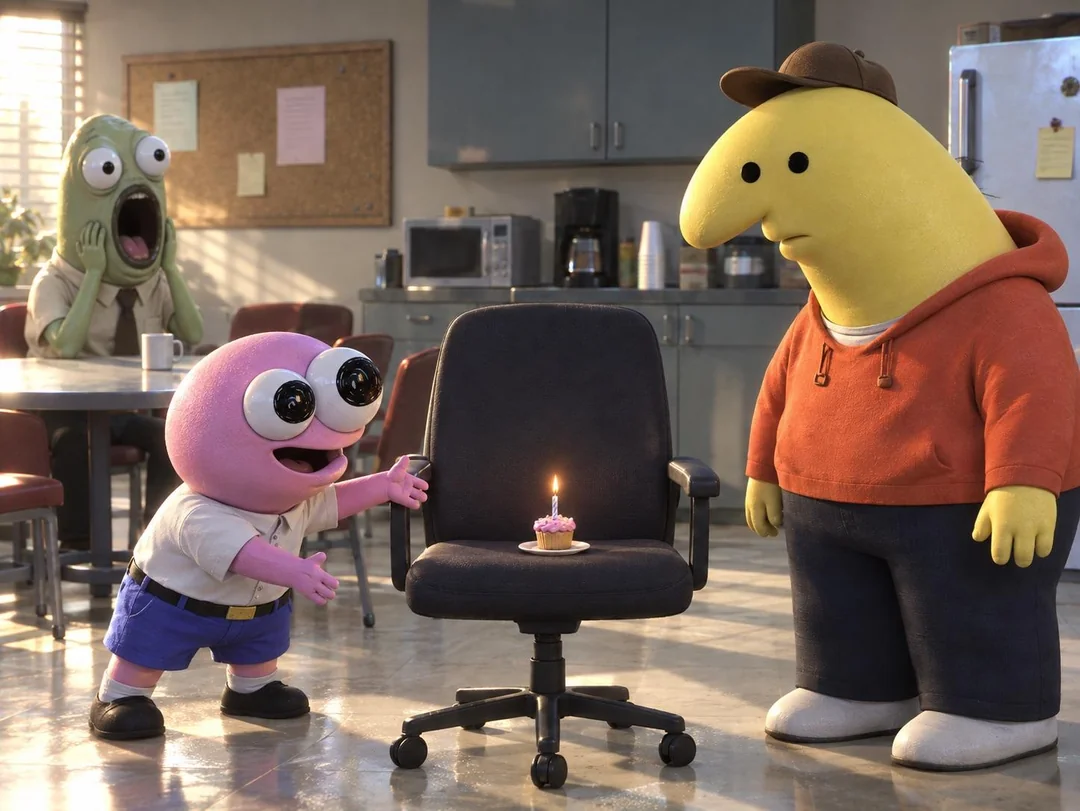
GPT Image 2.5 wurde am 8. September 2026 von OpenAI veröffentlicht. Erstellen Sie Produktfotos, Poster und Porträts aus Text oder Referenzbildern. Verfeinern Sie Hintergründe, Text und Details und bestimmen Sie genauer, was sich ändert und was erhalten bleibt.
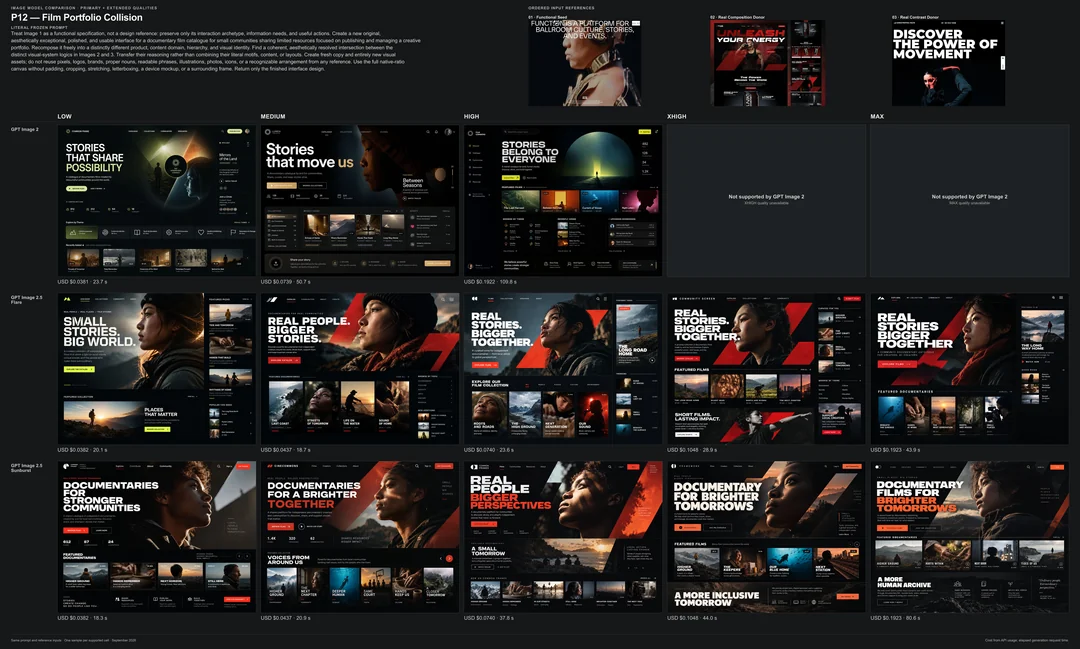
Flare und Sunburst unterstützen medium/high/xhigh/max-Qualität, 1K/2K/4K-Voreinstellungen und PNG/JPEG/WebP-Ausgabe. Die tatsächlichen Abmessungen können von der gewählten Voreinstellung abweichen.
GPT Image 2.5 vs. GPT Image 2: Was hat sich geändert?
GPT Image 2.5 bietet natürlichere Details, eine bessere Übereinstimmung mit Referenzbildern und mehr Kontrolle über Änderungen. Flare verkürzt zudem die Generierungszeit, während Sunburst auf höhere Bearbeitungspräzision setzt.
Merkmal
GPT Image 2
GPT Image 2.5
Veröffentlichung
21. April 2026
8. September 2026
Bilddetails
Realistische Bildgenerierung
Natürlicheres Licht und feinere Texturen
Referenzbilder
Nutzt Referenzbilder zur Steuerung der Ergebnisse
Bewahrt die Erkennbarkeit von Gesichtern, Produkten und anderen Motiven besser
Gezielte Änderungen
Unterstützt Änderungen per Textanweisung
Präzisere Änderungen mit weniger unerwünschten Anpassungen im restlichen Bild
Konsistenz über mehrere Bearbeitungen
Unterstützt weitere Bearbeitungsschritte
Bewahrt vorherige Änderungen und Details besser
Generierungsgeschwindigkeit
Basis für den Vergleich von OpenAI
Flare: laut OpenAI 50 % geringere Latenz
Arena-Rangliste Text-zu-Bild
Platz 3 · Wertung: 1381
Sunburst Platz 1 · 1421; Flare Platz 2 · 1399
Arena-Rangliste Einzelbildbearbeitung
Platz 3 · Wertung: 1461
Sunburst Platz 1 · 1520; Flare Platz 2 · 1491
Die Platzierungen stammen aus dem Arena-Ranglistenstand vom 7. September 2026, geprüft am 9. September 2026. Die Ergebnisse von GPT Image 2.5 sind als Preliminary (vorläufig) markiert und können sich mit weiteren Stimmen ändern. Die Einträge von GPT Image 2 verwenden die Qualitätsstufe medium. Die Geschwindigkeitsangabe gilt für Flare, nicht für Sunburst.
Beginnen Sie mit einem Prompt, einer Skizze oder einem Referenzbild. Erstellen Sie ein fertiges Motiv und verfeinern Sie anschließend die Details, ohne das gesamte Bild neu aufzubauen.
01
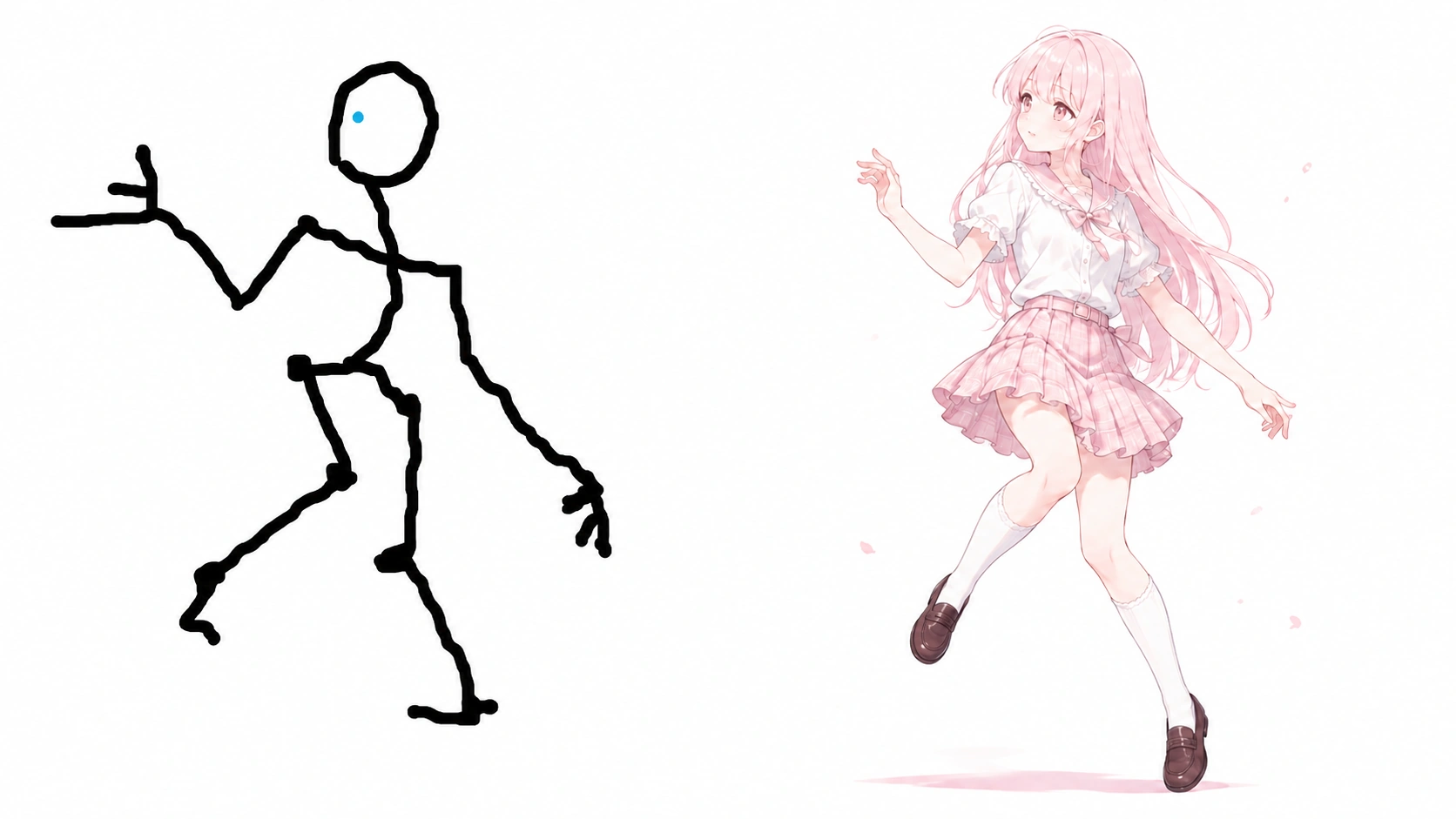
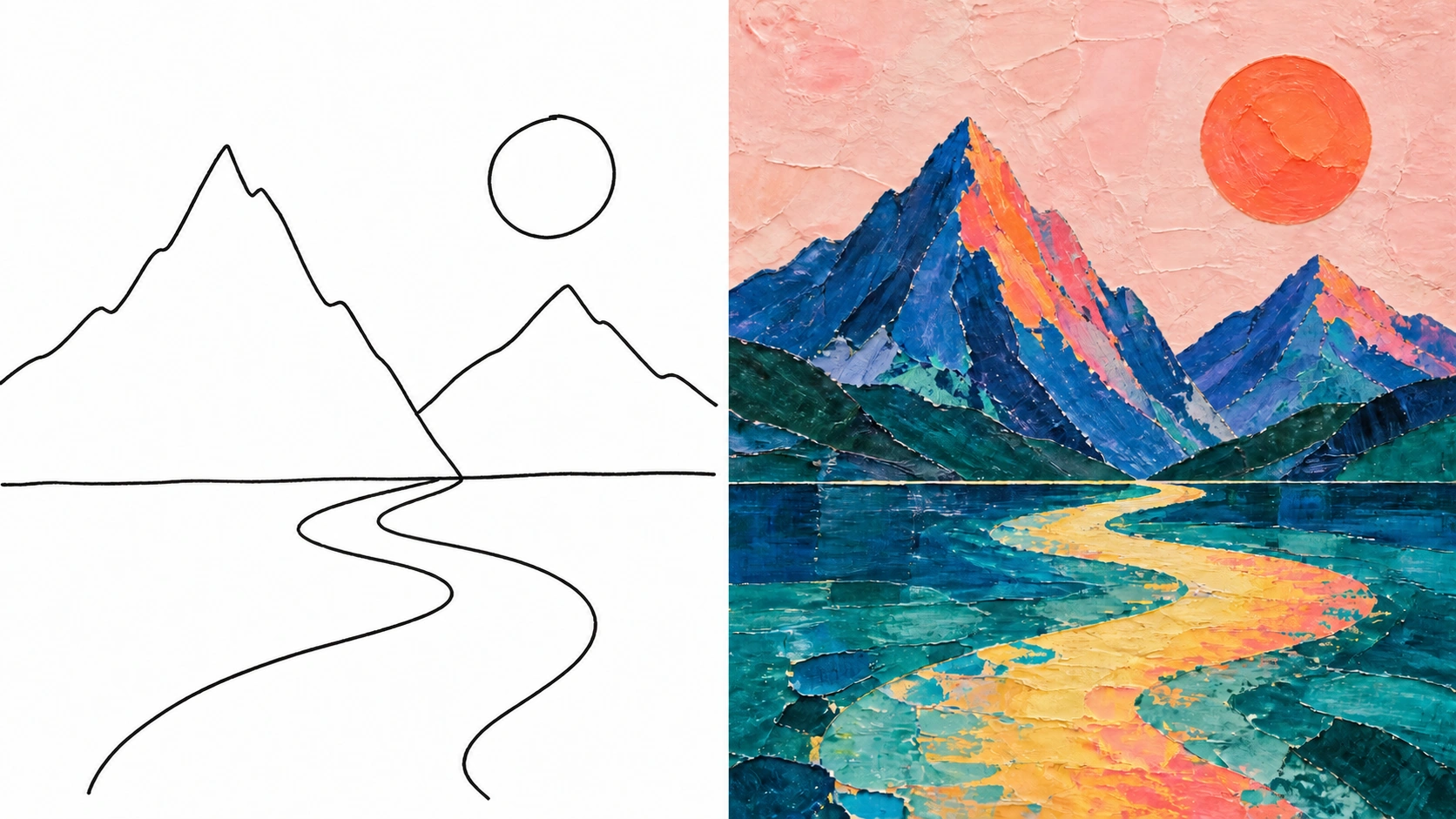
Skizzen in fertige Bilder verwandeln
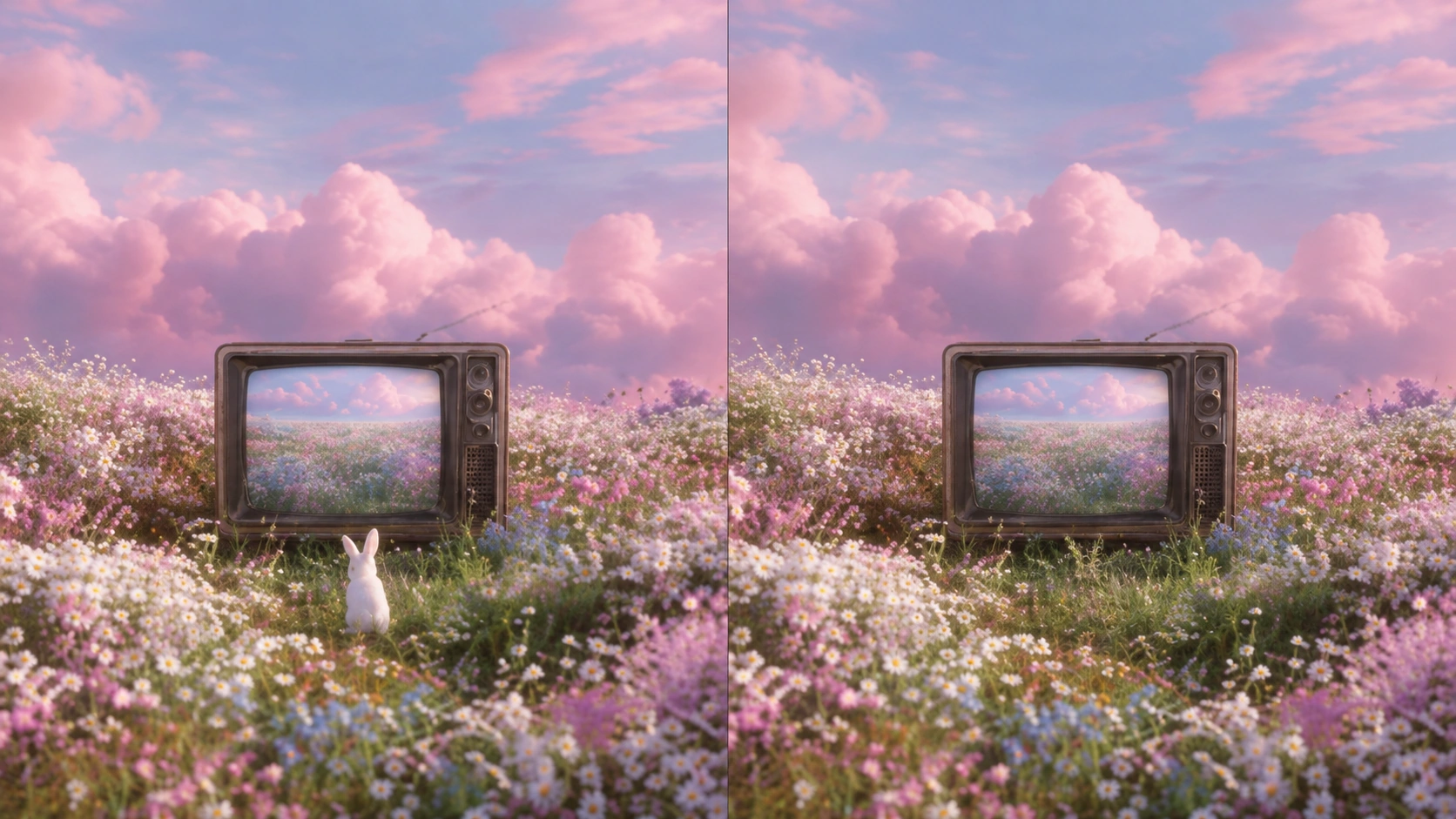
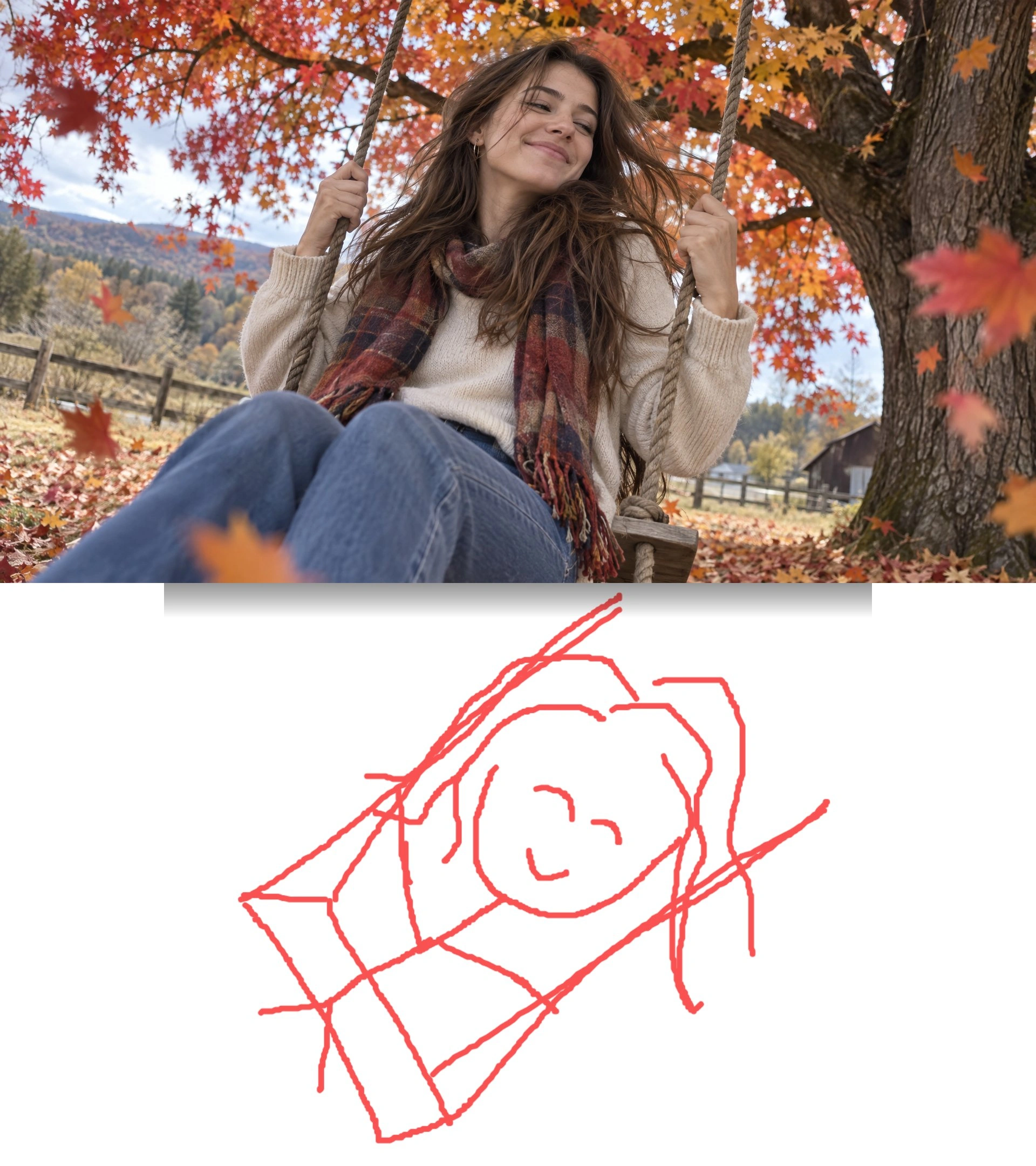
Verwandeln Sie eine grobe Zeichnung in ein Produktfoto, eine Raumgestaltung oder eine Szene im 3D-Stil. Laden Sie Ihre Skizze hoch und beschreiben Sie den gewünschten Look. Die Zeichnung gibt Positionen und Proportionen vor, während GPT Image 2.5 Farbe, Licht und Texturen ergänzt.
EinzelbilderAnimiertes GIF
02
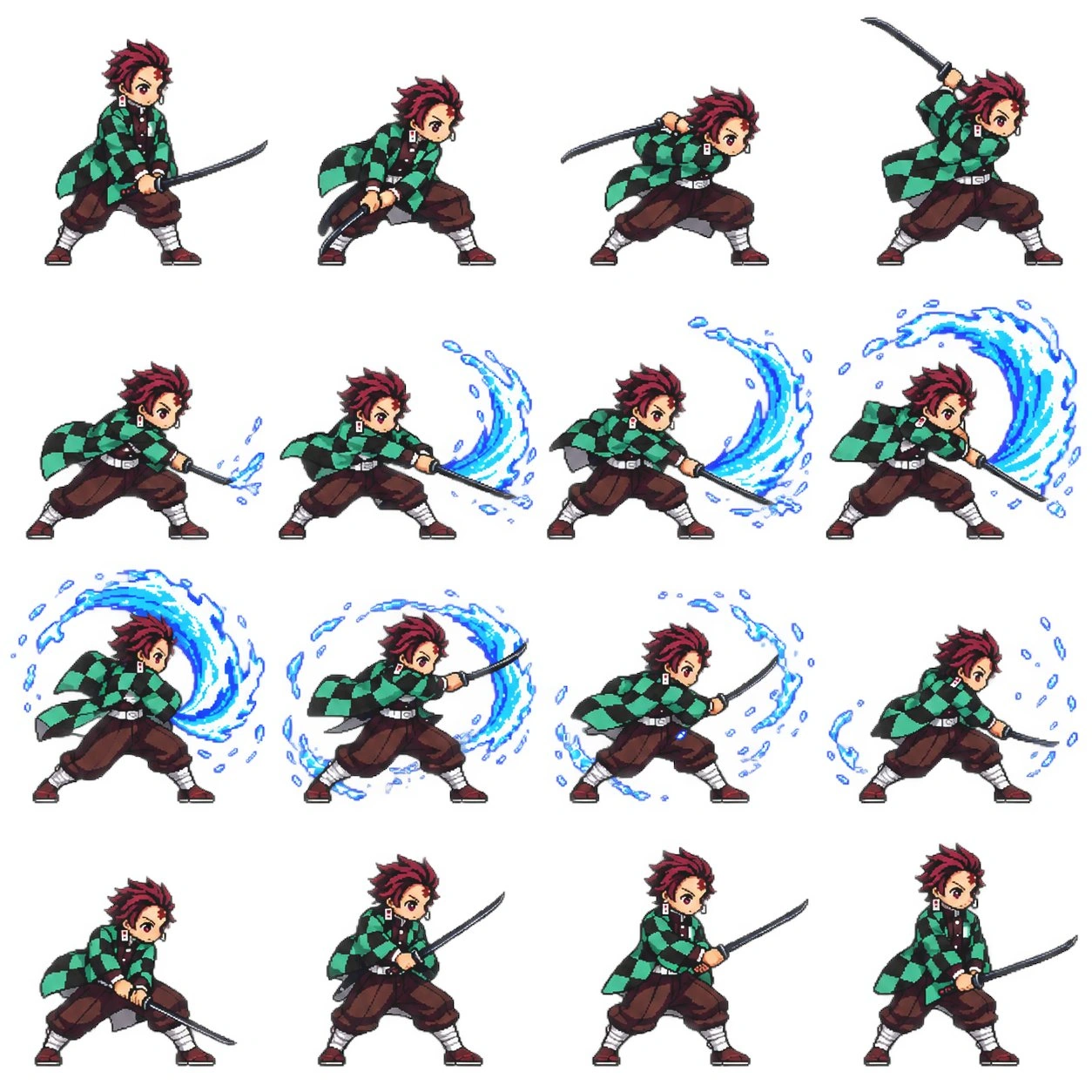
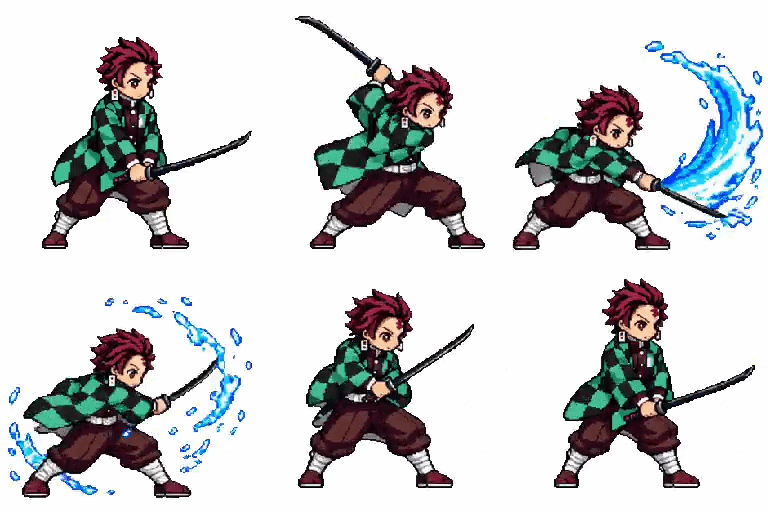
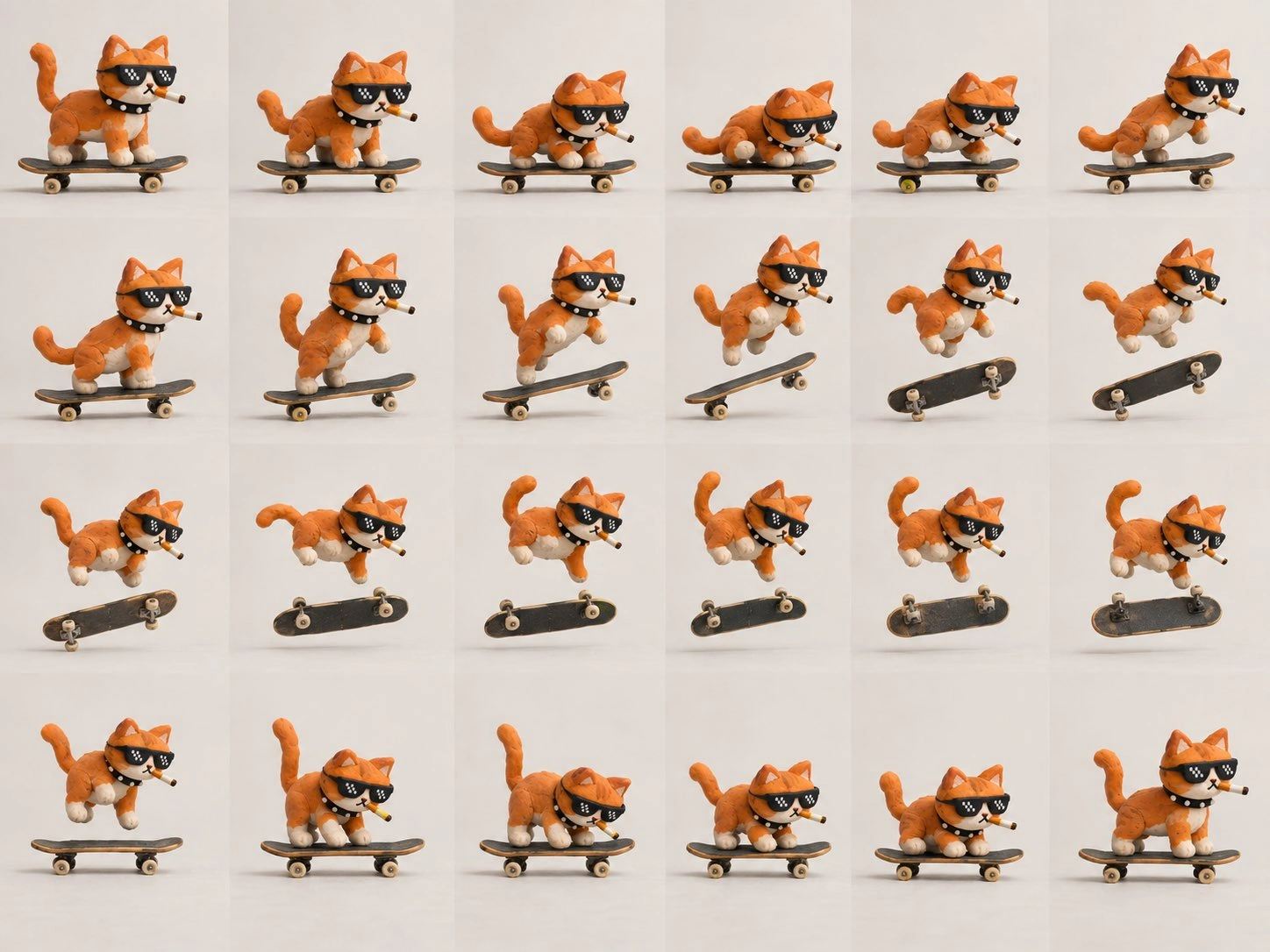
Einzelbilder für GIFs und Stop-Motion-Animationen erstellen
Erstellen Sie eine Bildserie mit kleinen Änderungen an Pose, Gesichtsausdruck oder Objektposition. Fügen Sie die Bilder anschließend mit einem separaten Editor zu einem GIF oder einer Animation im Stop-Motion-Stil zusammen. Eine gemeinsame Referenz hilft, Figur und Umgebung konsistent zu halten.
03
Bilder bearbeiten, ohne neu anzufangen
Ersetzen Sie einen Hintergrund, ändern Sie eine Produktfarbe oder aktualisieren Sie Text auf einem Poster. Beschreiben Sie, was sich ändern und was bleiben soll. GPT Image 2.5 ermöglicht präzisere Änderungen und hilft dabei, Motiv, Layout und umliegende Details zu bewahren.
04
Referenzmotive erkennbar halten
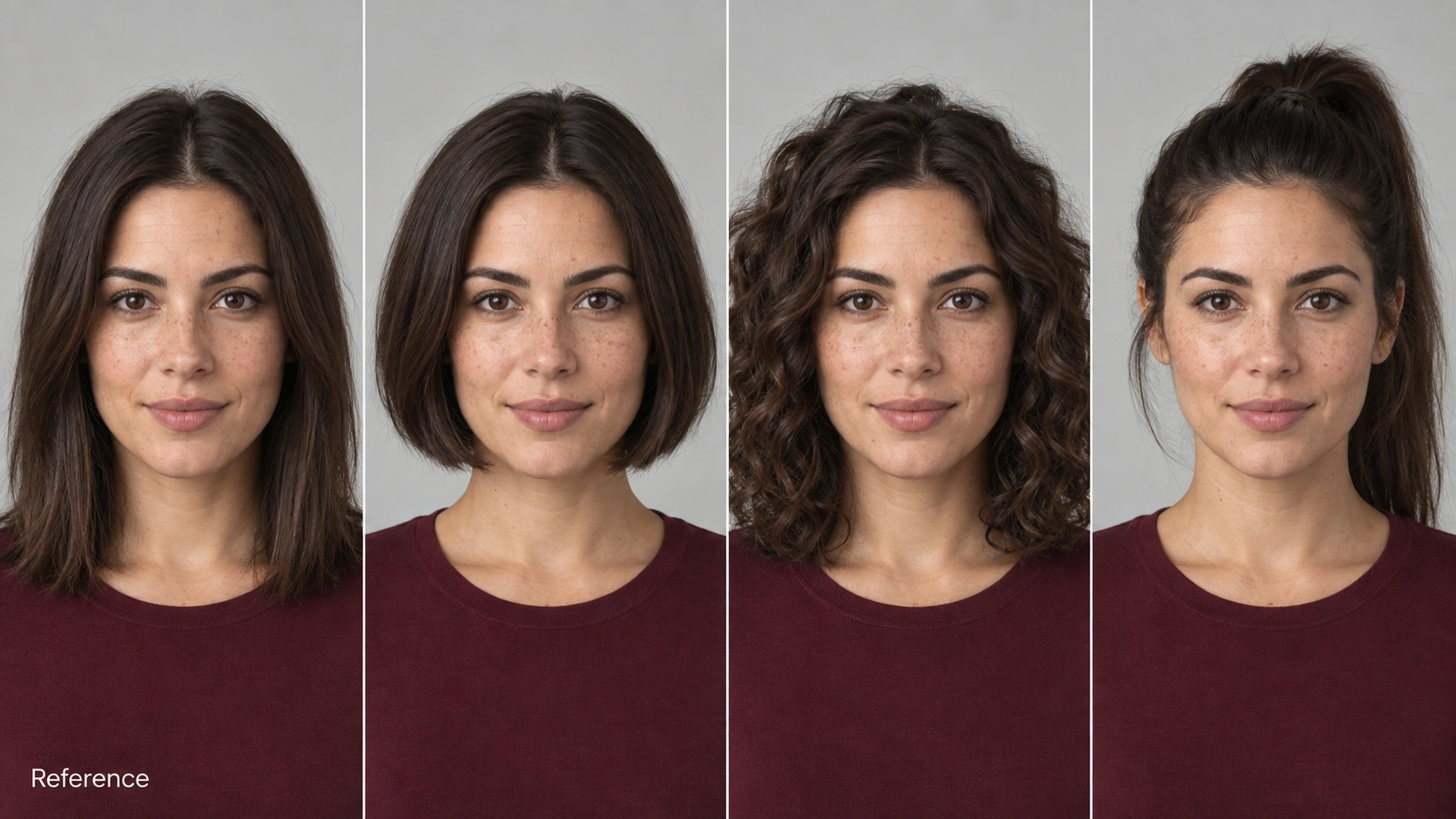
Platzieren Sie dasselbe Produkt in verschiedenen Umgebungen oder testen Sie einen neuen Porträtstil. Referenzbilder lenken das Ergebnis und helfen, markante Merkmale näher am Original zu halten. So entstehen zusammenpassende Produktaufnahmen oder Figurenbilder.
05
Poster mit Text und Layout gestalten
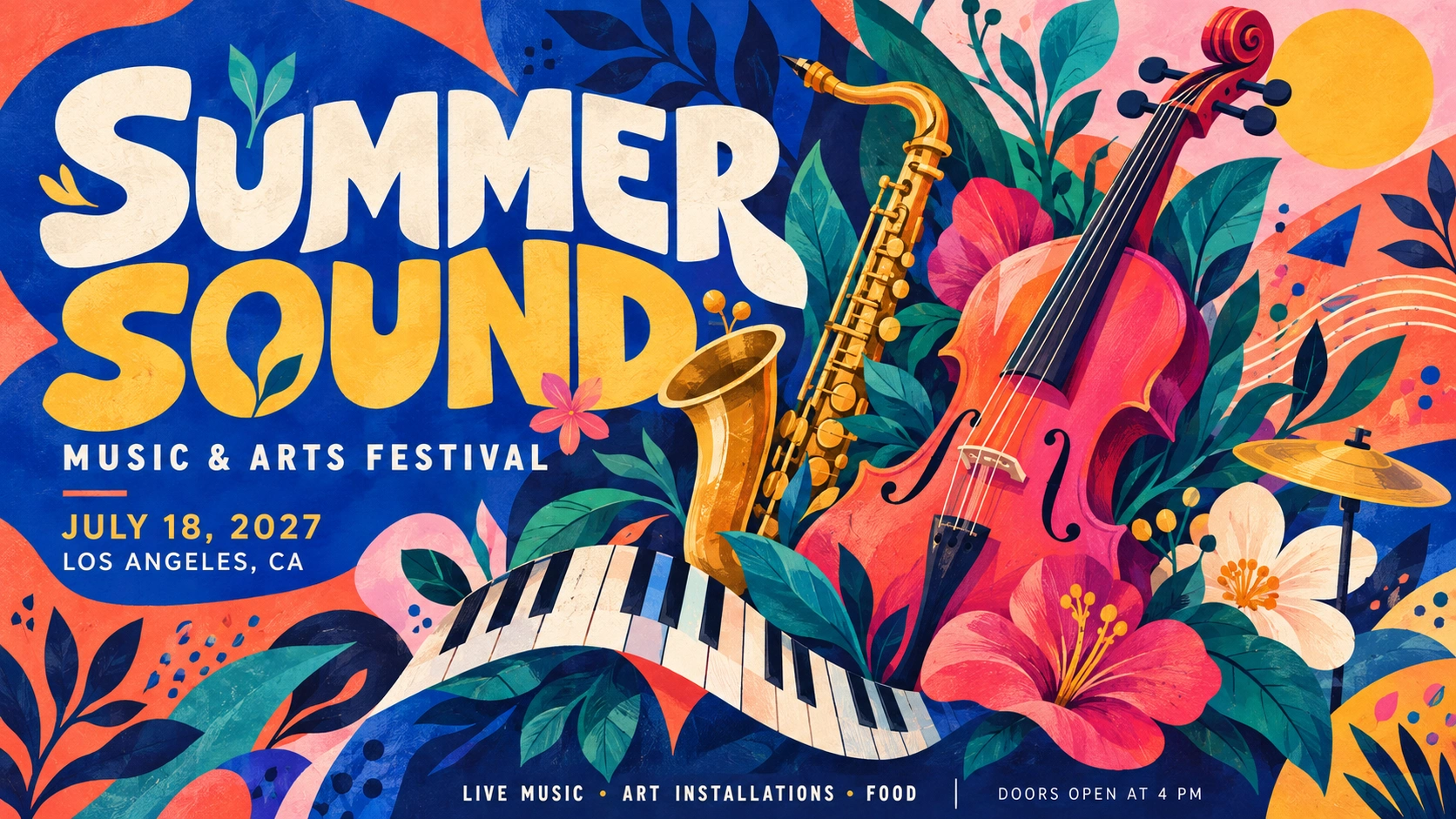
Gestalten Sie Veranstaltungsposter, Einladungen und Social-Media-Grafiken mit Text direkt im Bild. Geben Sie den genauen Wortlaut, die Position und die hervorzuhebenden Elemente an. Prüfen Sie vor der Veröffentlichung die Rechtschreibung und kleine Schrift.
06
Bilder mit natürlichen Details erstellen
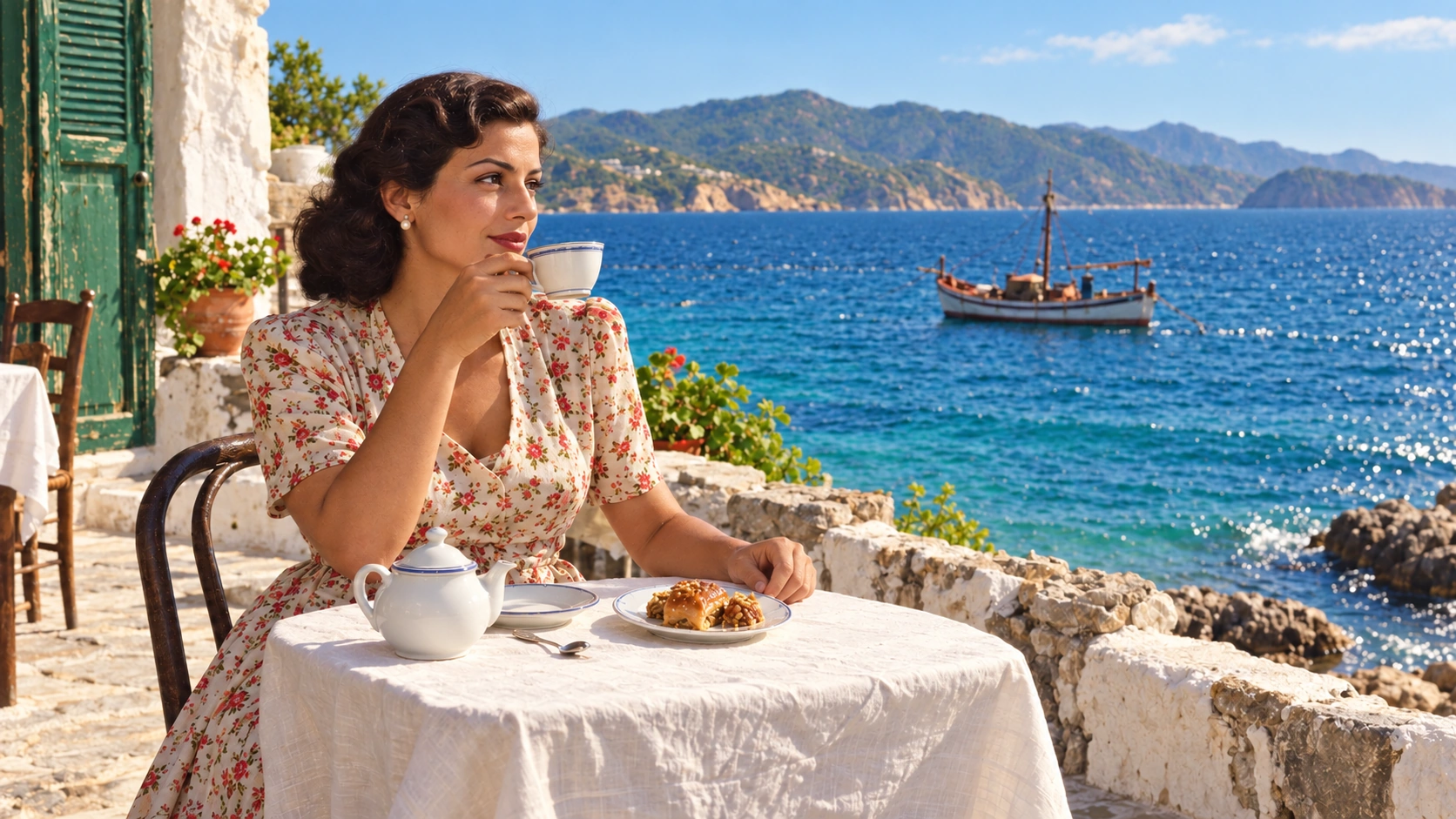
Generieren Sie Porträts mit natürlicher Hautstruktur, Kleidung mit sichtbaren Stoffdetails und Produkte mit glaubwürdigen Reflexionen. Beschreiben Sie Materialien, Lichtquelle und Umgebung – vom weich beleuchteten Studiofoto bis zur Außenszene.
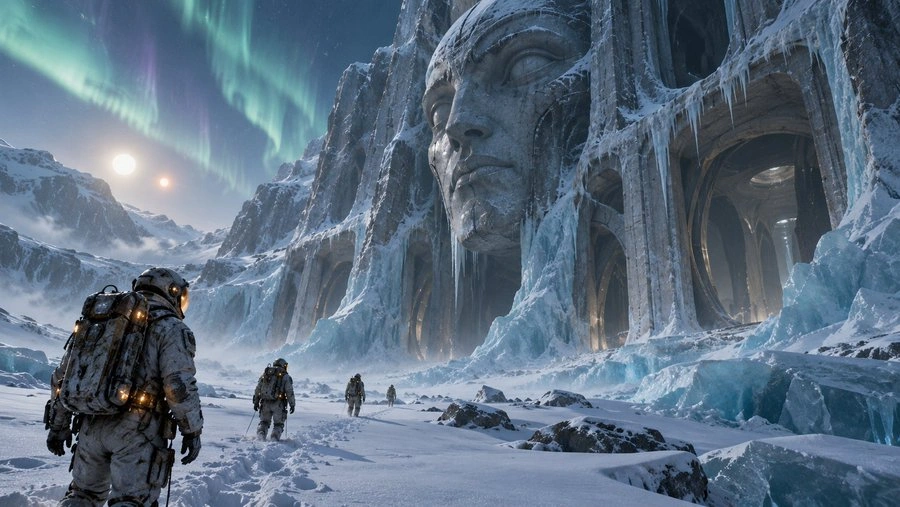
An expedition team in weathered EVA suits discovering cyclopean alien architecture half-buried in blue ice on a distant moon, a colossal stone face staring from a cliff, aurora lights dancing overhead, frost crystals catching the light of a distant binary star, footprints in untouched snow, sense of ancient dread, cold blue-cyan palette with warm suit lights, National Geographic meets Alien, cinematic documentary still.
Turn the reference sketch into a photorealistic autumn portrait, preserving its pose and composition. A young adult woman with long brown hair sits on a wooden swing, holding both ropes and smiling gently. She wears a cream knit sweater, burgundy plaid scarf, and blue jeans. Shoot from a close, slightly low angle beneath orange-red maple leaves, with a rustic fence and wooded hills behind her. Soft daylight, natural skin and fabric texture, windblown hair, subtle film grain. 16:9 landscape, finished photo only, no sketch or text.
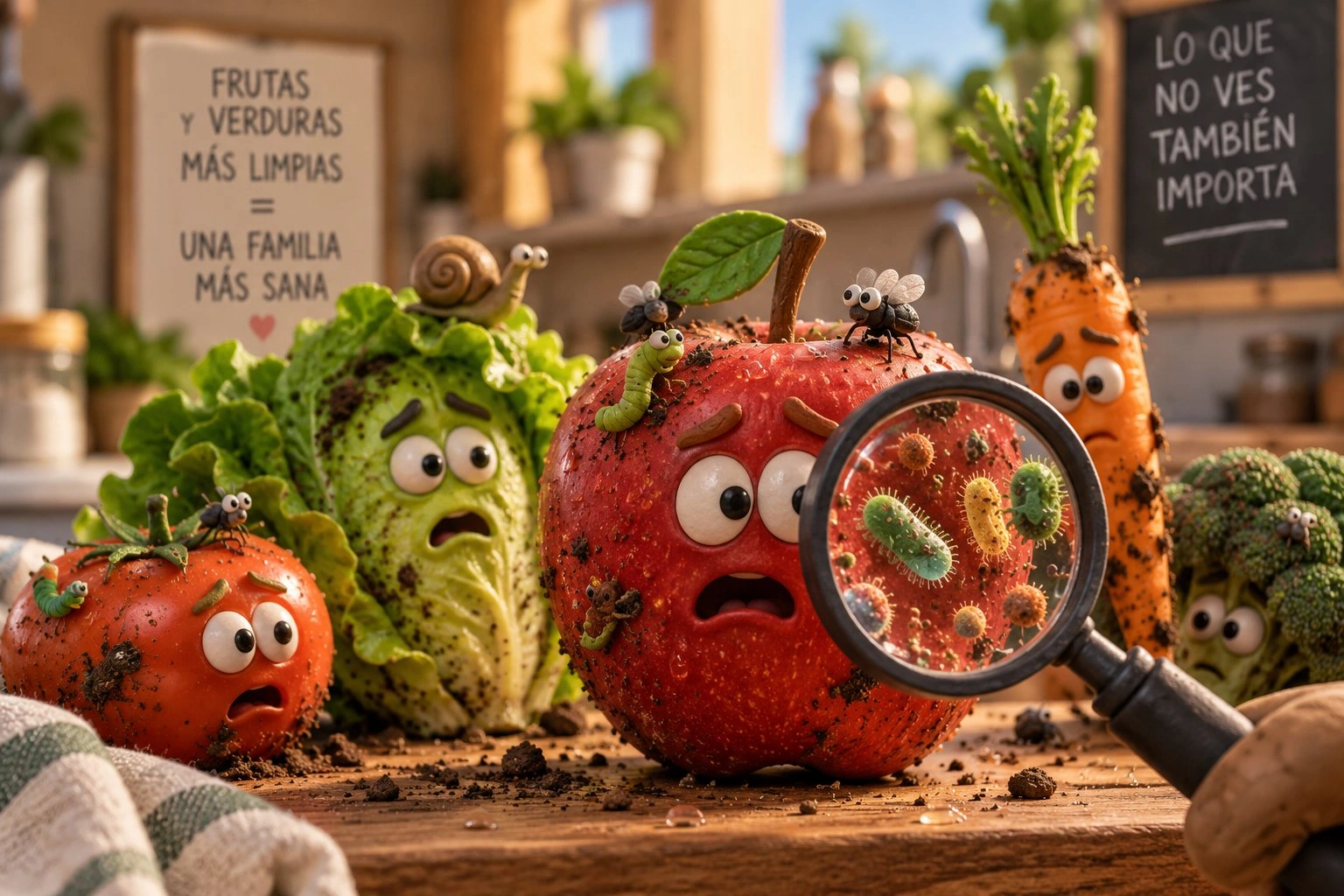
A whimsical cinematic 3D illustration of frightened, dirty fruits and vegetables on a wooden kitchen counter. A large red apple stands in the center, surrounded by a tomato, lettuce, carrot, and broccoli, all with expressive eyes and worried faces. Soil, caterpillars, flies, and a snail cover their surfaces. A hand holds a magnifying glass in the foreground, revealing colorful cartoon microbes on the apple’s skin. Warm sunlight, a cozy rustic kitchen, detailed textures, shallow depth of field, playful educational advertising style. Background signs read "FRUTAS Y VERDURAS MÁS LIMPIAS = UNA FAMILIA MÁS SANA" and "LO QUE NO VES TAMBIÉN IMPORTA." Landscape composition.
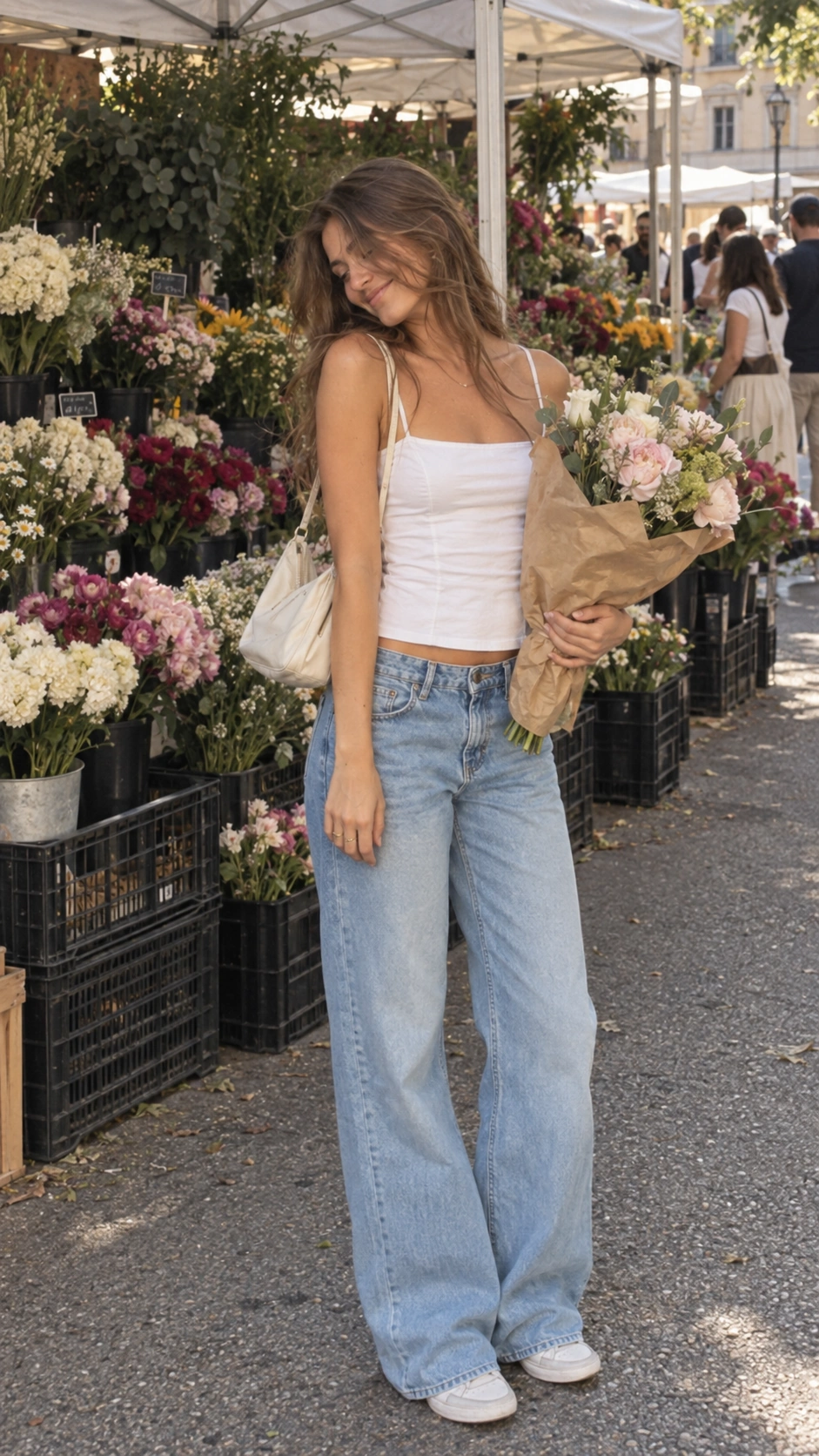
A candid full-body photo of a young adult woman at an outdoor flower market, holding a bouquet wrapped in brown paper. White camisole, loose light-blue jeans, ivory shoulder bag, tousled brown hair, looking down with a gentle smile. Colorful flower stalls, soft daylight, natural skin texture, subtle film grain.
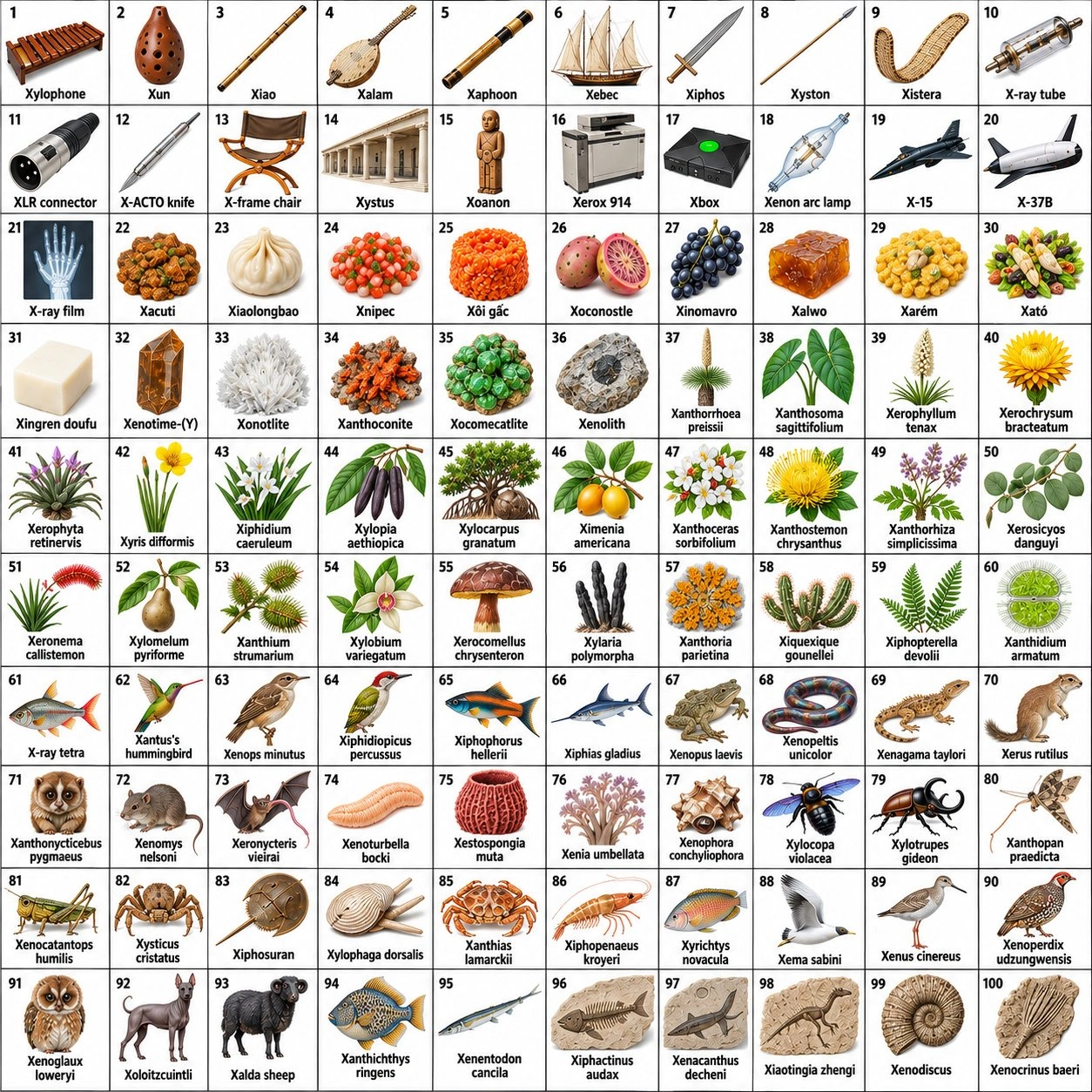
Find exactly 100 distinct, real, drawable physical things whose established English names start with X. Include varied objects, organisms, foods, materials, and artifacts.
Exclude invented names, "Xmas," abstract terms, symbols, software, duplicates, synonyms, trivial variants, and generic objects padded with X-word modifiers. Allow established compounds, common object abbreviations such as "XLR connector," accepted loanwords, and accurately drawable scientific terms. Verify obscure terms and avoid misleading names or illustrations.
For each entry, provide: number, exact name, category, brief definition, visual description, and High/Medium confidence. Check every entry twice for validity, tangibility, visual distinctness, accurate depiction, and suitability for a children’s educational chart. Exclude borderline entries where possible; identify any retained ones. Add a "Rejected candidates" section with brief reasons.
Prioritize accuracy over quantity. If fewer than 100 qualify, state this and provide the best verified set without inventing fillers.
Only after validating 100 entries, create a 10 × 10 picture grid. Each cell must show exactly one approved item, its number, and its unchanged name. Use a white background, consistent illustrations, clear cell divisions, large readable labels, and no decorative objects. Depictions must match the validated definitions precisely.
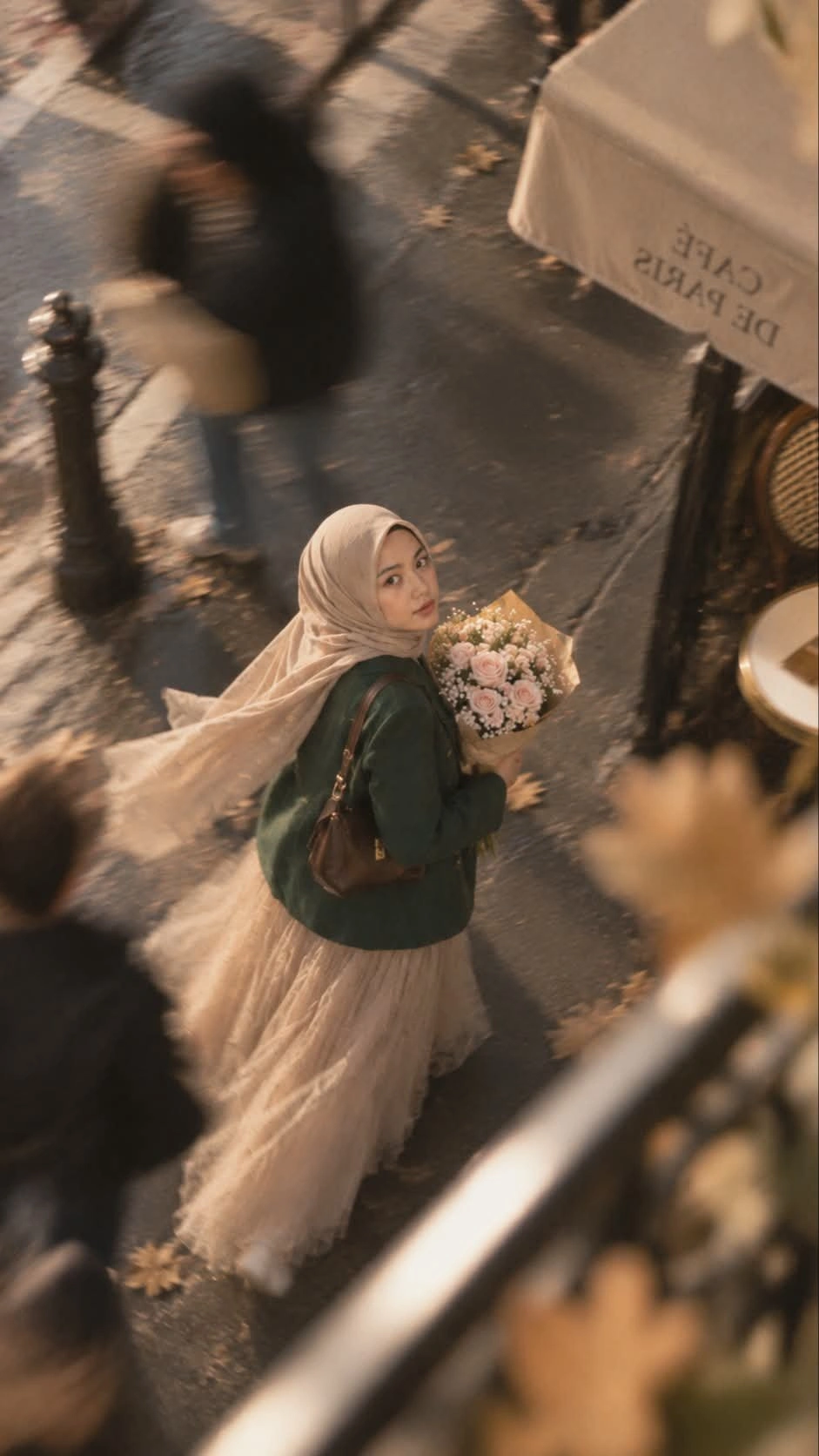
Photorealistic Paris street portrait, vertical 9:16. A young Southeast Asian hijabi woman walks forward, turning back toward the camera with a calm, curious expression. She wears a flowing taupe hijab, oversized emerald blazer, beige tulle maxi skirt, and brown leather shoulder bag, carrying blush roses wrapped in kraft paper. The Eiffel Tower is recognizable in the upper-right background.
Slow-shutter panning creates horizontal background blur while her face stays relatively sharp. Wind moves her hijab and skirt. Slight Dutch angle, 50mm perspective, soft afternoon backlight, muted natural colors, creamy highlights, and subtle film grain. Romantic, candid, and realistic. No aged-photo effects, heavy grain, orange grading, plastic skin, CGI, text, or watermark.
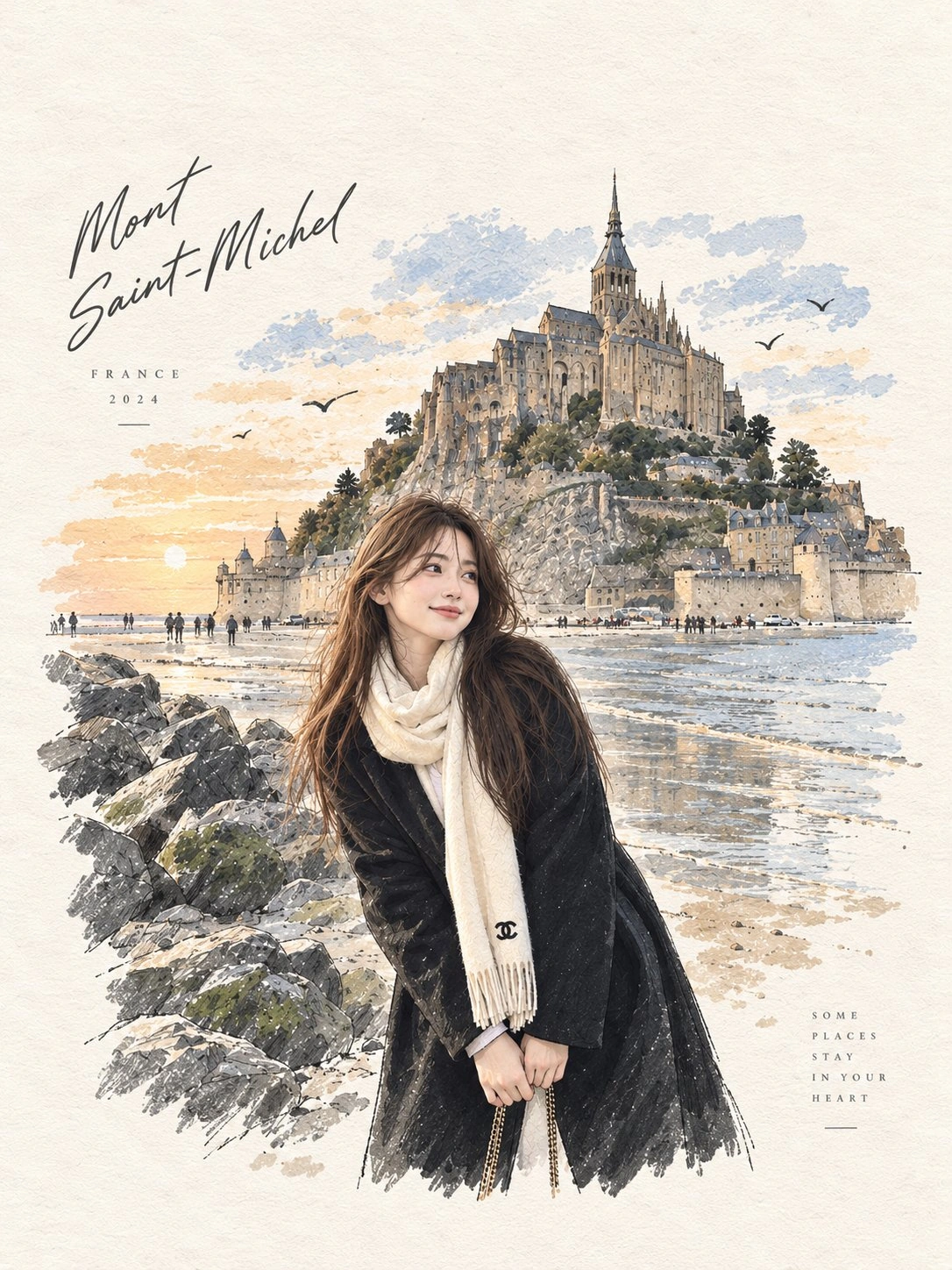
Photorealistic travel portrait of a young East Asian woman on a sandy shore beside moss-covered rocks, with a grand medieval stone abbey rising on a rocky island behind her. Long dark brown hair, gentle smile, looking at the camera. She wears an oversized black coat with hands in pockets, a cream scarf, and a subtle chain shoulder bag. Soft evening light, pale blue sky, detailed stone architecture, natural skin and fabric textures, candid smartphone-photo feel.
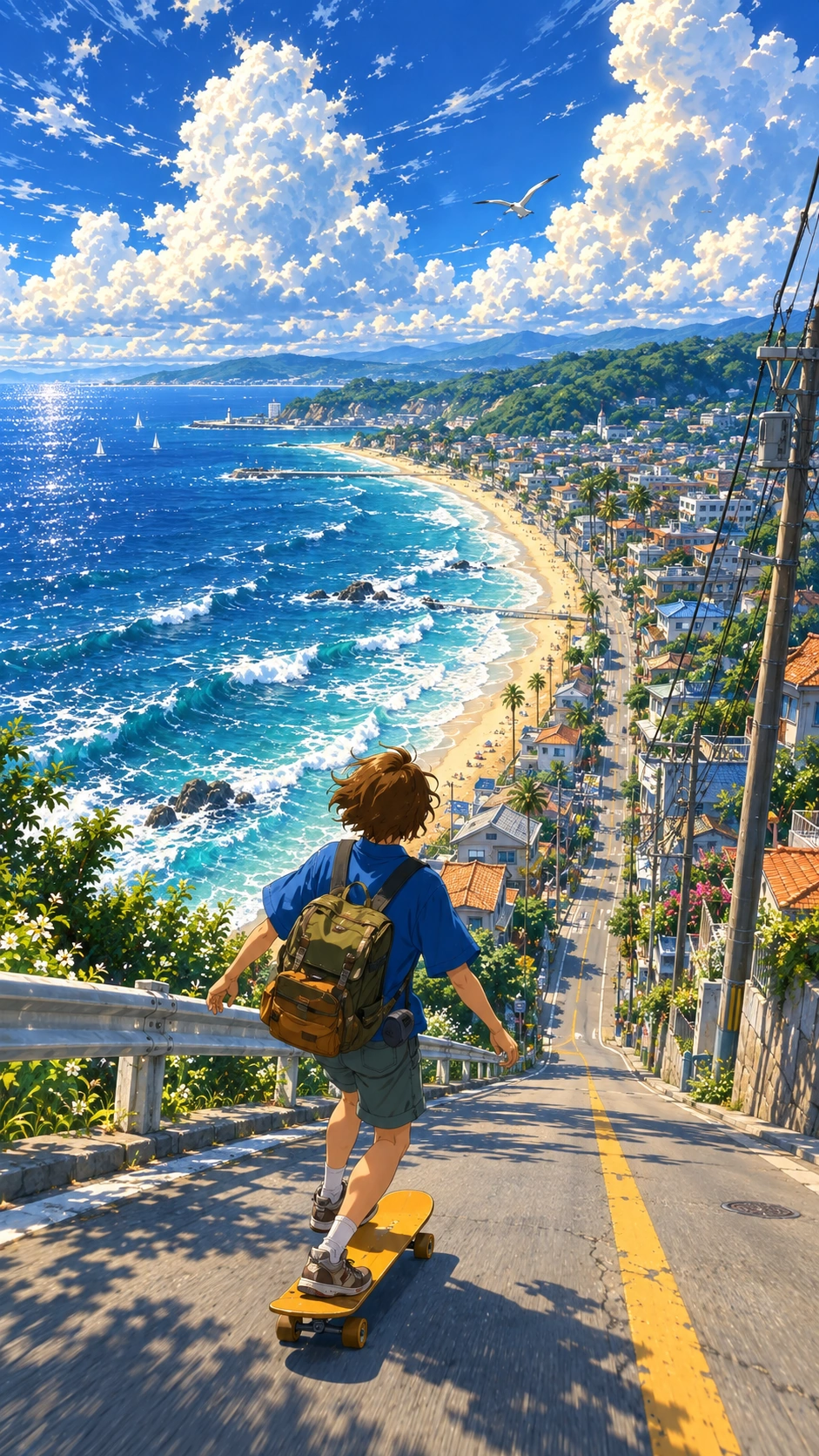
Makoto Shinkai-style anime illustration of a boy with a backpack skateboarding down a steep coastal street, viewed from behind. A sparkling turquoise ocean and crescent beach on the left, a detailed seaside town on the right, towering white clouds in a brilliant blue sky. Vivid summer colors, cinematic sunlight, nostalgic atmosphere.
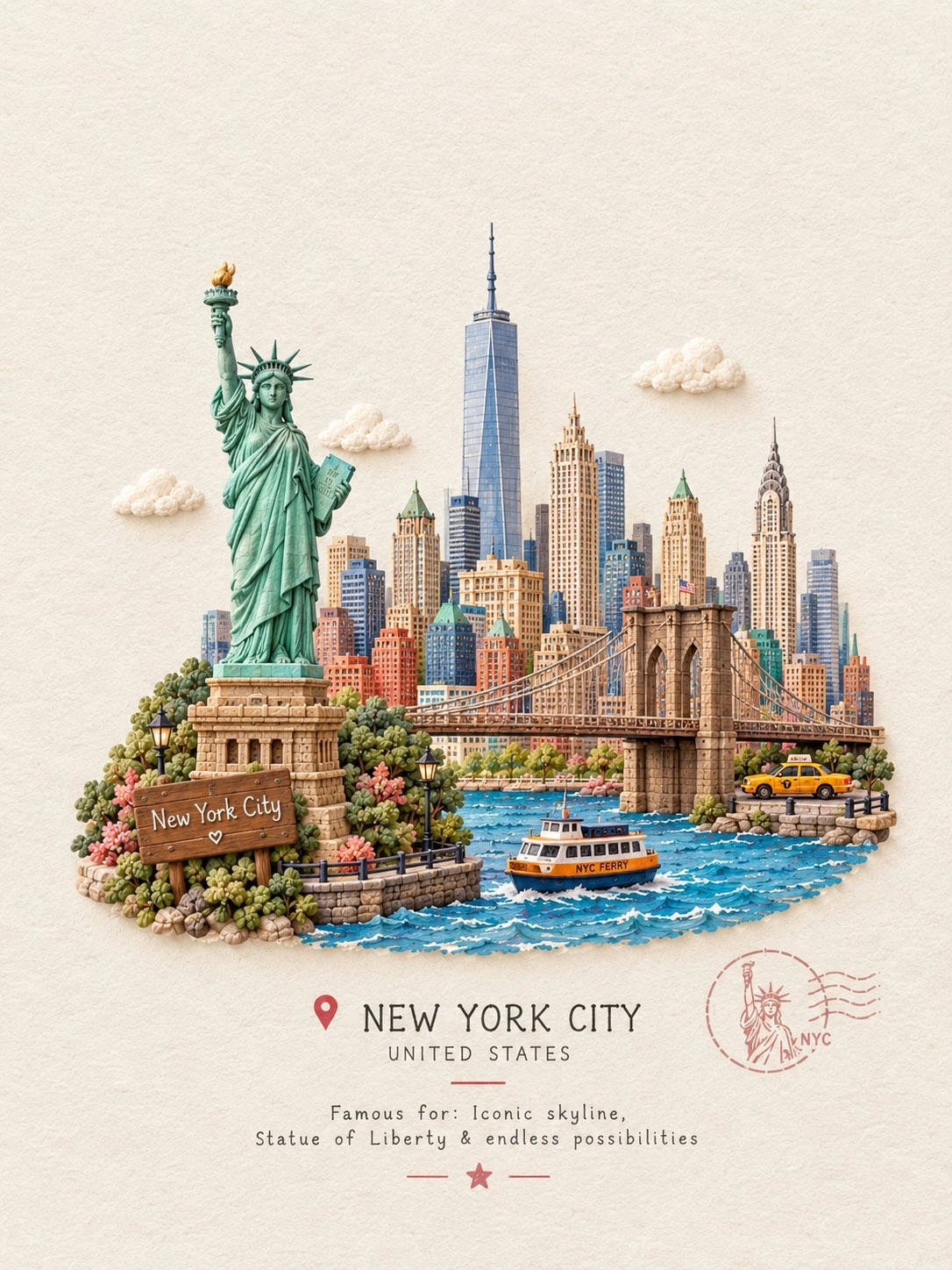
Create a charming handcrafted miniature travel scene featuring [ICONIC STRUCTURE] as the main focal point.
Show the landmark as a beautifully sculpted tiny 3D model, with soft rounded details, handmade textures, delicate imperfections, and a whimsical storybook feeling. Surround it with a few subtle elements that represent its location—such as tiny trees, flowers, streets, boats, mountains, clouds, or local objects—without making the scene crowded.
Place everything on a clean warm-white textured paper background, with plenty of elegant negative space. Add a small tasteful wooden or paper travel plaque containing:
[STRUCTURE NAME]
[CITY, COUNTRY]
Famous for: [SHORT UNIQUE FACT]
Use soft natural lighting, gentle shadows, pastel yet realistic colors, miniature diorama depth, handcrafted clay/paper textures, and a premium cute travel-journal aesthetic. Centered composition, highly detailed landmark, adorable but sophisticated, clean and collectible travel-card design, no photorealistic people, no clutter.
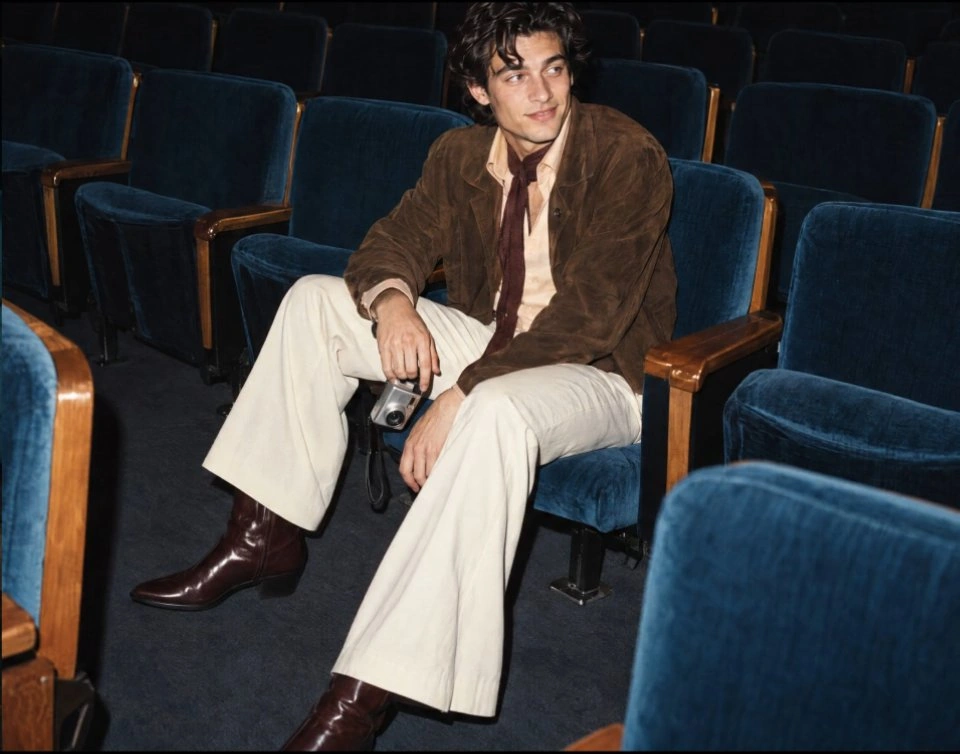
A candid fashion portrait of a young man with tousled dark hair sitting among empty blue velvet theater seats. Brown suede jacket, cream shirt, loose burgundy tie, ivory wide-leg trousers, and dark leather boots. Holding a small silver camera, looking off-camera. Direct flash, natural textures, subtle film grain, vintage editorial style. Landscape, approximately 5:4.
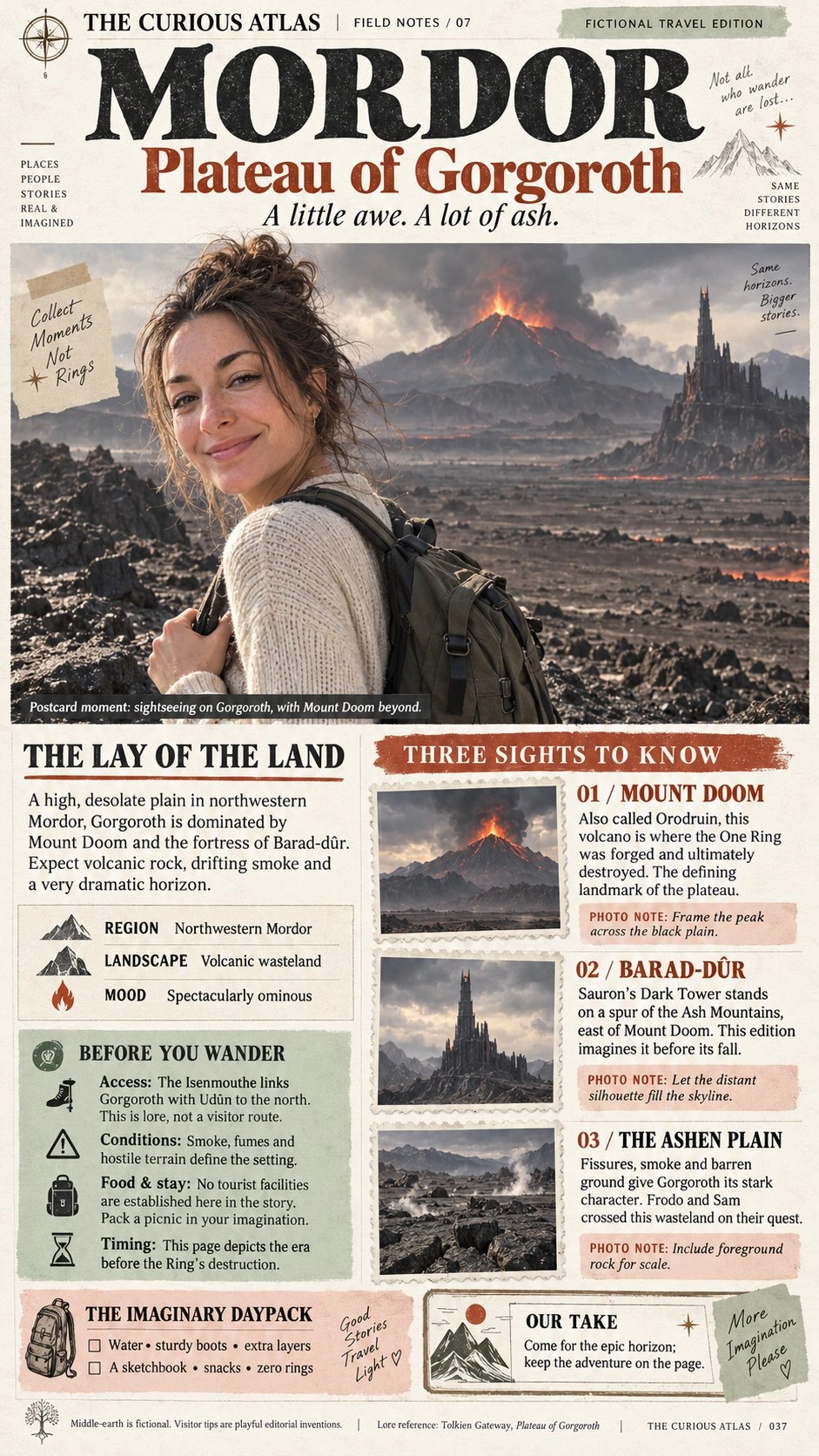
Create image of Magazine feature article [travel] guide page, cute, information dense photo book style magazine feature article page. Add all necessary sections, tips, recommendations, information. add photos for any sections and recommendations if you like. Place the attached person at the precise location of [Plateau of Gorgoroth in Mordor]. Seamlessly blend the attached person as if they are sightseeing. Approach this task with the understanding that this is a critical, information rich page that will significantly influence visitor numbers, text accuracy is important.
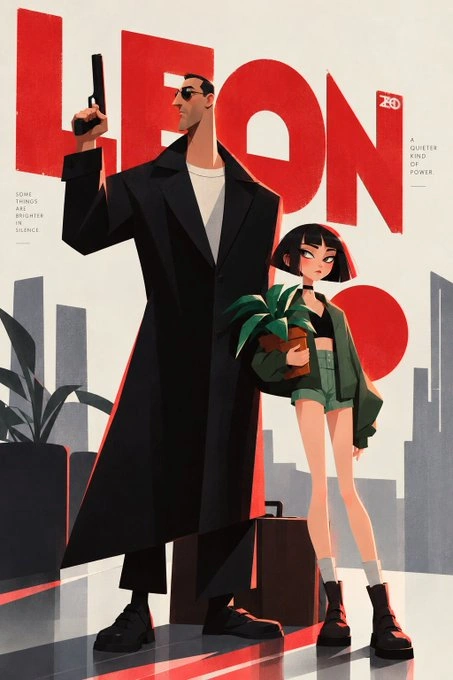
A minimalist illustrated poster inspired by Léon: The Professional. A tall man in sunglasses and a long black coat holds a suppressed pistol upright beside a young girl with a short black bob, an oversized green jacket, shorts, and black boots. She holds a potted plant; a suitcase rests between them. Huge red "LEON" lettering fills the upper background, with a simplified gray city skyline below. Angular geometric shapes, elongated proportions, dramatic shadows, subtle paper texture, and a restrained red, black, cream, and green palette.
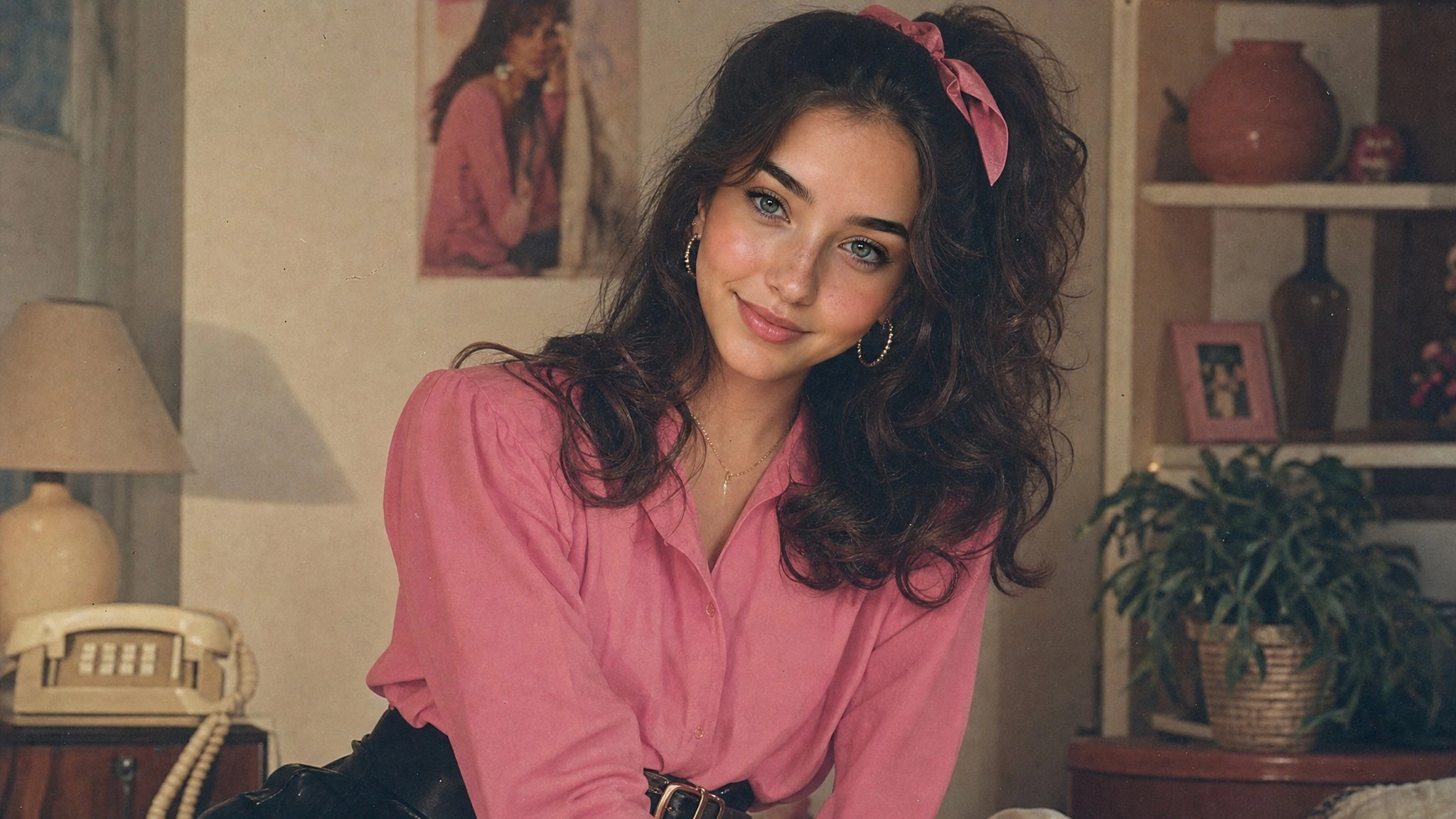
Transform my photo into an authentic 1980s retro Indian fashion portrait, inspired by the reference image. Keep the exact face, facial features, face structure, skin tone, identity, and natural proportions unchanged. Do not alter or beautify the face. Dress her in a full-sleeve pink shirt tucked neatly into a black high-waisted skirt with a stylish belt. Remove the scarf completely. Add simple 1980s-inspired accessories. Give her bouncy, voluminous retro hair styled with a cute ribbon. Create an authentic 1980s background and atmosphere. Use a Kodak film-camera look with warm faded colors, subtle film grain, soft analog texture, gentle vintage lighting, and natural skin texture. Make it look like a genuine photograph taken in the 1980s, not a modern photo with a vintage filter. No watermark, no text, no distortion.
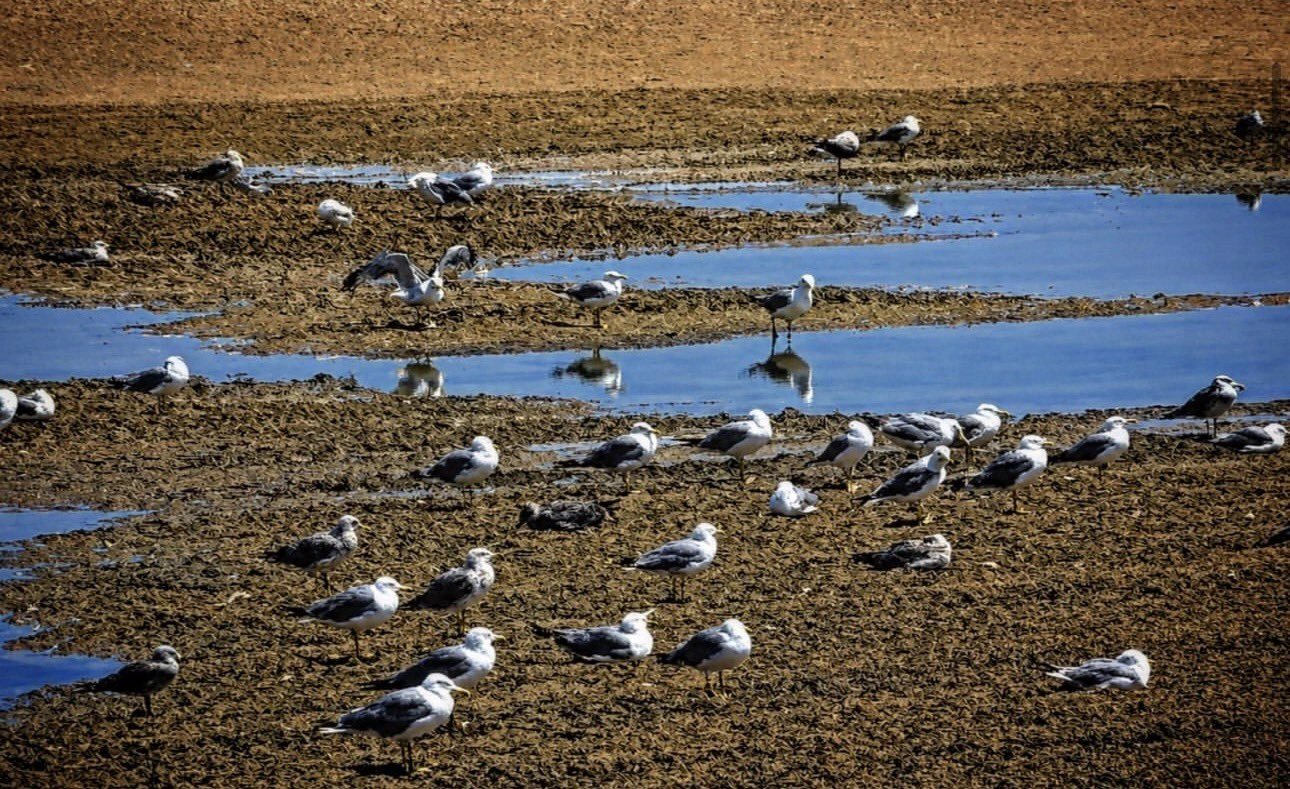
A documentary wildlife photograph of dozens of seagulls resting on brown seaweed-covered tidal flats, scattered between winding pools of vivid blue seawater. Some stand with clear reflections, others rest or stretch their wings. Elevated viewpoint, layered horizontal composition, strong natural sunlight, crisp shadows, detailed coastal textures, realistic colors. Landscape format, no text or interface elements.
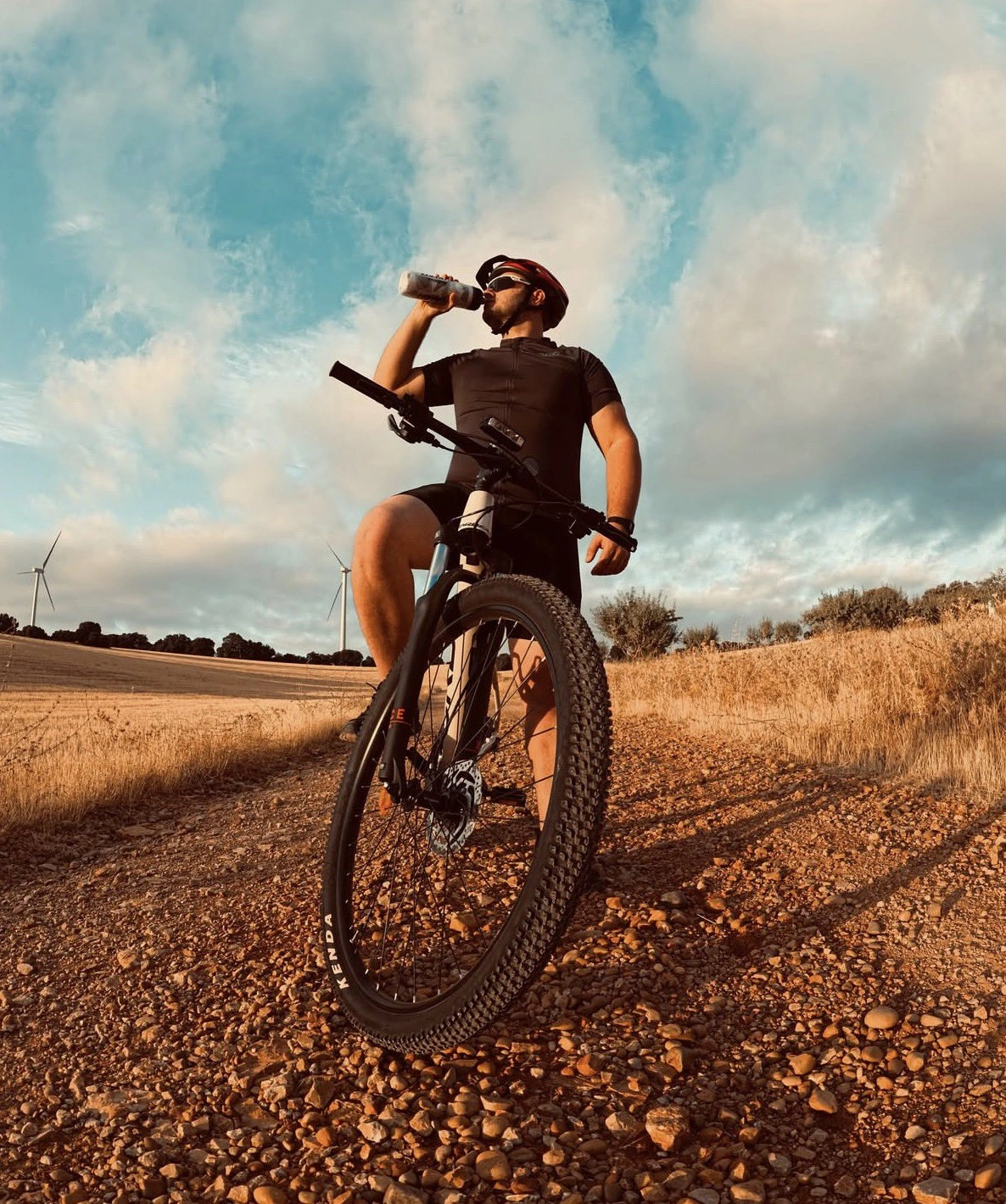
A dramatic low-angle photograph of a male cyclist resting astride a mountain bike on a rocky countryside trail, drinking from a water bottle. Black cycling kit, red-and-black helmet, sunglasses. The large front tire dominates the foreground, surrounded by dry golden grass and distant wind turbines beneath a turquoise sky with towering clouds. Warm late-afternoon sunlight, long shadows, rich earthy colors, detailed gravel, wide-angle perspective. Vertical composition, realistic outdoor sports photography.
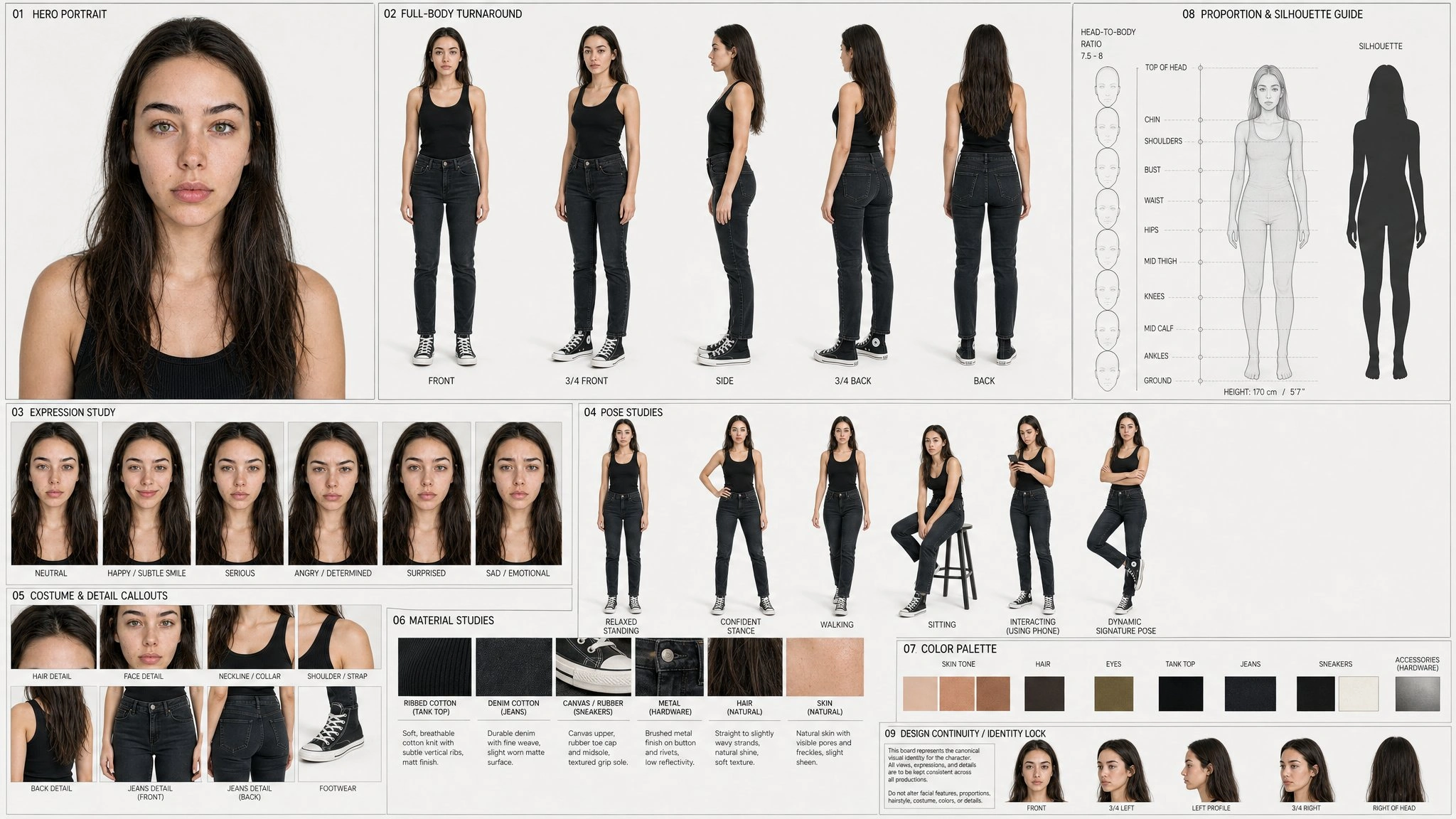
Create a professional 16:9 character reference sheet based strictly on the uploaded image. Preserve the character’s exact face, age, hairstyle, body proportions, costume, accessories, colors, and distinctive details without redesign.
Include:
One large hero portrait.
Five aligned full-body views: front, front three-quarter, side, back three-quarter, and back.
Six expressions: neutral, happy, serious, angry, surprised, and sad.
4–6 natural full-body poses.
Costume, accessory, and material close-ups.
A faithful color palette, proportion guides, and silhouette thumbnail.
Use a clean off-white background, organized grid, generous spacing, readable labels, consistent scale, neutral studio lighting, and detailed materials. Keep identity and left/right design details consistent throughout. No overlapping or cropped figures, anatomical errors, extra props, clutter, logos, or watermarks. Target resolution: 15360 × 8640.
Create ONE 16:9 landscape storyboard image with exactly 16 panels in a clean 4×4 grid, read left to right, top to bottom. Polished 3D animation style, expressive comedy, detailed food, cinematic lighting.
Keep two consistent characters: a tall, lean, long-limbed chef with a dark moustache, white jacket and apron; and a short, round, exhausted guest with messy hair, a wrinkled shirt and loose tie. Setting: a closed restaurant kitchen with steel counters, copper pans and large wall switches.
Panels:
1. The chef wipes the counter; the guest slumps beside cold takeaway noodles under one spotlight.
2. The guest pokes the noodles, then drops his forehead onto the counter.
3. The chef notices him and sets down his clothes.
4. The chef rolls up his sleeves and tightens his apron.
5. He switches on the kitchen lights; the burners ignite.
6. He rapidly slices beef into neat pieces.
7. Orange flames rise from a copper pan; the chef remains calm.
8. The guest ducks as a pan flies past, his tie blown backward.
9. The chef juggles cooking tasks and tosses a pan overhead.
10. A rapidly spinning pepper grinder releases a huge pepper cloud.
11. The guest sneezes, then watches wide-eyed.
12. The chef catches two falling pans without spilling anything.
13. Overhead view of beautifully plated beef medallions, dark sauce and three tiny herbs.
14. The guest tastes the dish, closes his eyes and sheds a joyful tear.
15. The guest grins; the chef smirks and discards the takeaway box.
16. The kitchen goes dark except for the guest’s spotlight as he keeps eating.
Maintain matching faces, costumes, props and kitchen layout. Lighting shifts from cool darkness to warm cooking light, then back to darkness. Clear panel borders, small numbers 1–16 only, no dialogue, captions, logos or watermark.
Unverhoffte Helden
Videoergebnis
Prompt
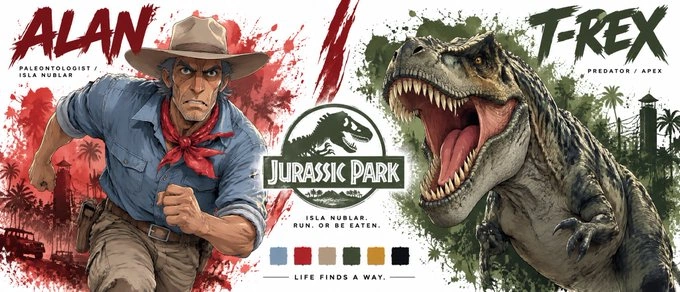
Create a premium cinematic character bible sheet for CALVIN & BOB from central intelligence.
LAYOUT: Split screen partner format. Two halves divided by a bold dramatic dividing element in the center.
LEFT SIDE — CALVIN: Deep blue watercolor splash behind him fading into center. Large bold brushstroke text CALVIN top left in deep blue. Below small text: THE SPY / CENTRAL INTELLIGENCE. One massive dramatic cropped hero image of Calvin from mid-thigh up — enormous muscular build, light blue unicorn t-shirt, no fanny pack, serious focused expression, fist raised, deep blue watercolor splash radiating behind him.
CENTER: Bold dramatic CENTRAL INTELLIGENCE in deep blue slightly worn. Below it small text: OFFICE PARK. UNLIKELY HEROES.
RIGHT SIDE — BOB: Warm yellow and white watercolor splash behind him fading into center. Large bold brushstroke text BOB top right in deep yellow. Below small text: THE ACCOUNTANT / CENTRAL INTELLIGENCE. One massive dramatic cropped hero image of Bob from mid-thigh up — wide nervous eyes, white striped shirt, normal grey blue tie loosened, mouth open mid scream, warm yellow and white watercolor splash radiating behind him.
BOTTOM CENTER: Color palette — deep blue, warm yellow, white, grey. Tagline centered: ONE WAS READY. ONE WAS NOT.
OVERALL: Clean white background, deep blue watercolor left side, warm yellow watercolor right side, dramatic blue center divider, bold flat color blocking, chunky simplified forms, hard edge shadows, thick black outlines, vibrant saturated colors, minimal clean typography, cinematic cel-shaded 3D anime, hand-painted textures, not cartoon not Disney not Pixar, print ready.
Filet Wellington
Videoergebnis
Prompt
Create a 15-second cinematic anime cooking sequence in a stainless-steel kitchen with warm dramatic lighting. Follow the uploaded character sheet exactly: a tall, athletic, middle-aged chef with spiky blonde hair, blue eyes, a white chef uniform and black apron. No other chefs.
0–2s: Sear beef fillet, turning each side until golden.
2–4s: Finely chop mushrooms and cook into dark duxelles.
4–6s: Layer Parma ham and duxelles, then tightly roll around the beef using cling film.
6–8s: Remove the film, wrap in pastry, seal and brush with egg wash.
8–10s: Place in the oven; jump cut to the golden baked Wellington.
10–13s: Sound briefly drops as he slices through, revealing pink beef beneath crisp pastry.
13–15s: Wide hero shot of the steaming Wellington; the chef steps back proudly.
Cel-shaded 3D anime, hand-painted textures, strong shadows and subtle film grain. Food-focused close-ups, occasional chef reactions, cuts every 2–3 seconds. Preserve cooking order, compressing preparation and baking through montage. Build orchestral music with sizzling and chopping sounds toward the finale.
Nutze Flare oder Sunburst im Arbeitsbereich, Playground oder über die API. Jedes erzeugte Bild wird einzeln abgerechnet.
1
Prompt oder Bilder hinzufügen
Beschreiben Sie ein völlig neues Bild oder fügen Sie Referenzbilder hinzu und erklären Sie, was Sie erstellen oder ändern möchten.
2
Einstellungen wählen und generieren
Wählen Sie Bildgröße und Qualität, prüfen Sie die Credit-Kosten und klicken Sie auf Generieren.
3
Prüfen und herunterladen
Prüfen Sie Ihr Bild und laden Sie es herunter. Für weitere Änderungen laden Sie das Ergebnis hoch und beschreiben, was geändert und was beibehalten werden soll.
GPT Image 2.5: Rezensionen und Community-Diskussionen
Entdecken Sie Erfahrungsberichte, Bildbeispiele und praktische Demos auf Reddit, YouTube und X. Sehen Sie, welche Prompts ausprobiert, welche Ergebnisse geteilt und welche Grenzen festgestellt werden.
Flare ist auf schnelle Bildgenerierung ausgelegt. Sunburst eignet sich besser für detaillierte Änderungen, bei denen Präzision wichtig ist. Beide erstellen Bilder aus Text und arbeiten mit Referenzbildern.
Kann ich eine Skizze, ein Foto und eine Stilreferenz zusammen verwenden?+
Ja. Laden Sie sie gemeinsam hoch und erklären Sie die Rolle jedes Bildes. Zum Beispiel: „Folge dem Layout der Skizze, behalte die Person aus dem Foto und nutze die Farben der Stilreferenz.“
Wie gebe ich an, welchem Bild das Modell folgen soll?+
Verweisen Sie auf die Upload-Reihenfolge und beschreiben Sie, was aus jedem Bild übernommen werden soll. Beispiel: „Nutze @Image1 für das Gesicht und @Image2 für die Kleidung. Behalte den Hintergrund aus @Image1.“
Wie ändere ich nur einen Teil eines Bildes?+
Nennen Sie, was sich ändern und was bleiben soll. Beispiel: „Ändere die Jacke zu Blau. Behalte Gesicht, Pose, Licht und Hintergrund unverändert.“ Prüfen Sie das Ergebnis, da kleine unbeabsichtigte Änderungen weiterhin möglich sind.
Warum verändern sich Details nach mehreren Bearbeitungen?+
Jede Bearbeitung kann kleine Unterschiede verursachen, die sich mit der Zeit summieren. Verwenden Sie die ursprüngliche Referenz erneut und wiederholen Sie wichtige Details wie Gesicht, Produktform oder Logoposition, um dies zu reduzieren.
Kann GPT Image 2.5 Text in verschiedenen Sprachen hinzufügen?+
Ja, die Genauigkeit kann jedoch je nach Sprache, Schriftart und Textgröße variieren. Geben Sie den genauen Wortlaut in Anführungszeichen und die gewünschte Position an. Prüfen Sie Rechtschreibung und kleine Schrift vor der Veröffentlichung.
Kann GPT Image 2.5 GIFs erstellen?+
Es erstellt Standbilder, keine fertigen animierten GIFs. Sie können eine Reihe von Bildern generieren und anschließend in einem GIF-Editor kombinieren. Halten Sie Hintergrund und Bildausschnitt konsistent und die Änderungen zwischen den Bildern klein.
Wie verwandle ich ein Bild in ein Seedance 2.5-Video?+
Laden Sie das Bild herunter und bei Seedance 2.5 hoch oder wählen Sie es direkt aus der Galerie als Referenz oder Startbild. Beschreiben Sie Bewegung, Kameraführung und Timing. GPT Image 2.5 erstellt das Motiv, Seedance 2.5 bringt Bewegung hinein.
Erwecken Sie Ihre Ideen mit GPT Image 2.5 zum Leben
Beginnen Sie mit einem Prompt, einer Skizze oder einem Foto. Erstellen Sie mit GPT Image 2.5 auf SeeGen AI etwas Neues oder verfeinern Sie ein vorhandenes Bild.