01
Reference roles
Define what each image, video, or audio reference should control.
Learn how to write better Seedance 2.5 prompts for text-to-video, multi-reference generation, video editing, extension, audio-driven videos, and 30-second storytelling.
Use clear reference roles, timelines, camera directions, audio cues, and consistency rules to get more controlled and reliable results.
A good Seedance 2.5 prompt clearly tells the model what to create, how each reference should be used, what happens over time, and what should stay consistent. You do not need to make every prompt long—the goal is to give clear instructions without adding unnecessary details.
Original Prompt
Use the reference image for the bald man. In a 1990s American diner, he bumps into a waitress carrying breakfast. Food and coffee fly everywhere and time suddenly freezes. Everyone stops moving except him. He grabs some bacon and an egg, walks toward the exit while eating, then time returns to normal and everything falls to the floor. He turns back and shrugs. Make it cinematic, realistic, dramatic, and funny.
Optimized Prompt
Photorealistic cinematic 1990s American diner with red vinyl booths, neon signs, chrome details, checkerboard floor, soft window light mixed with warm practicals, subtle handheld texture, lived-in period detail, and heavy film grain. Use @Image1 as the exact character reference for the bald bearded man in black sunglasses and a dark hoodie. Keep his face, beard, head shape, skin texture, and clothing consistent throughout. 0–5s — Medium Wide The man sits in a red booth, stands up, turns, and collides hard with a waitress carrying a breakfast tray with eggs, bacon, toast, and a coffee pot. 5–12s — Dynamic Tracking / Super Slow Motion The collision sends the tray, food, and coffee flying upward. Coffee forms suspended ribbons and droplets as the camera smoothly orbits the impact. At the peak, time freezes completely: the waitress, patrons, and airborne food remain motionless. Only the man can move. He pauses with a clear "I messed up" expression, then grabs two bacon strips and a fried egg from the frozen debris. 12–22s — Tracking Shot He walks through the frozen diner toward the exit, casually eating the bacon and egg. Everyone and everything else remains perfectly suspended. 22–27s — Medium Shot As he reaches the door, time suddenly resumes. Plates, food, tray, and coffee crash to the floor at once while the waitress and patrons react in shock. 27–30s — Medium Close-Up He pauses, turns slightly, raises his eyebrows, and gives a small "it is what it is" shrug with a quiet half-smile, still holding the remaining food. STYLE & REQUIREMENTS: Photorealistic, cinematic lighting, realistic fluid and object physics, detailed suspended coffee droplets, natural motion blur, stable character identity, heavy film grain, strong temporal coherence, no visual artifacts.
Not every Seedance 2.5 prompt needs all eight elements. At a minimum, clearly define the subject, action, and setting. If you use reference images, videos, or audio, also explain what each reference controls and which subject it represents. Add camera, visual style, audio, and consistency instructions when you need more precise control.
Define what each image, video, or audio reference should control.
Clearly map references to characters, products, objects, or scenes.
Describe the location, background, atmosphere, and important scene details.
Describe the key actions and use timestamps for longer or multi-shot videos.
Define shot size, camera angle, movement, framing, and transitions.
Set the visual style, lighting, color tone, mood, and overall aesthetic.
Specify dialogue, language, music, sound effects, ambience, or audio references.
Lock character identity, clothing, products, environments, and other important details.
Basic Prompt Formula
References + Subjects + Setting + Timeline + Camera + Style + Audio + Constraints
When you upload images, videos, or audio to Seedance 2.5, use @mentions to tell the model what each reference should control. Clear reference roles are especially important when combining multiple assets in one prompt. For editing or extension requests, use the dedicated Video Edit or Video Extend mode.
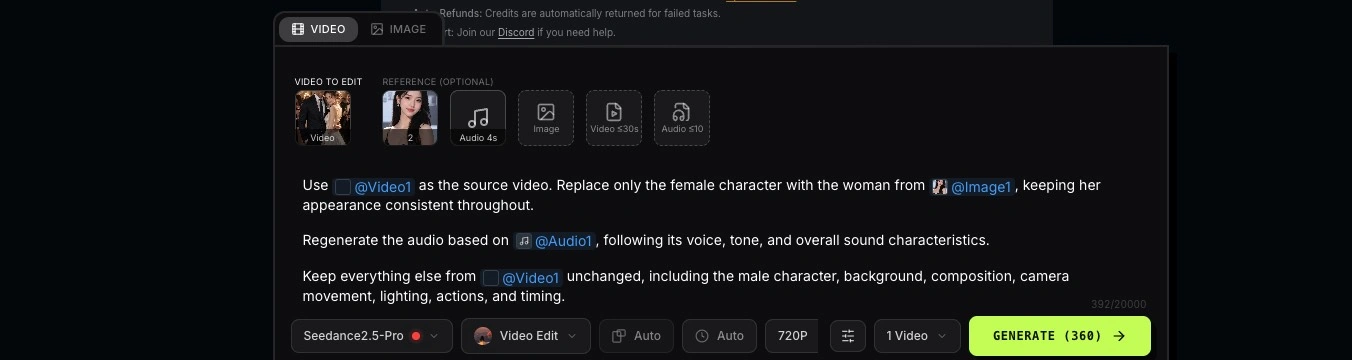
Character reference
Use @Image1 as the main character reference.
Product / outfit reference
Keep the product and outfit consistent with @Image2.
Scene / style reference
Use @Image3 as the environment and visual style reference.
Motion reference
Follow the character motion and timing from @Video1.
Camera reference
Follow the camera movement and framing from @Video2.
Audio reference
Use @Audio1 as the music, rhythm, or voice reference.
First & Last Frame
Start from @Image1 and naturally transition to @Image2 as the final frame.
Video Extend
Continue @Video1 forward with the same character, scene, camera movement, and visual style.
Video Edit
Use @Video1 as the source video. Replace the red bag with the black bag from @Image1 while keeping everything else unchanged.
Tip: Instead of simply mentioning @Image1 or @Video1, always explain what that reference is responsible for.
Explore ready-to-use Seedance 2.5 prompts for different video styles and creative scenarios. Copy a prompt, customize the references and details, and use it as a starting point for your own video.
Generate a video using only a text prompt. Describe the subject, action, setting, timeline, camera movement, lighting, style, and audio when needed.
Prompt element: Subject · Setting · Actions · Camera · Lighting · Constraints
Example Prompt
A young East Asian woman in a grey sleeveless top with thin silver hoop earrings, soft overcast light, blurred coastal background, and subtle handheld camera drift. Her hair moves gently in the wind. 1. She holds back a cry, lips pressed tight, chin trembling, tears filling her eyes. 2. She breaks into a sob. Tears roll down her cheeks as she closes her eyes and lowers her head. 3. Her shirt collar is pulled upward from below frame, covering her chin, mouth, and nose with realistic fabric deformation. No hands or arms appear. 4. The fabric falls back naturally. She looks downward, exhausted, breathing heavily with tears still on her face.
Includes Image-to-Video and First & Last Frame. Use keyframe images to define the starting point or both the beginning and end of the video, then describe the motion and transition between them.
Prompt element: References · Subject · Setting · Timeline · Camera · Style · Consistency
Reference materials
Example Prompt
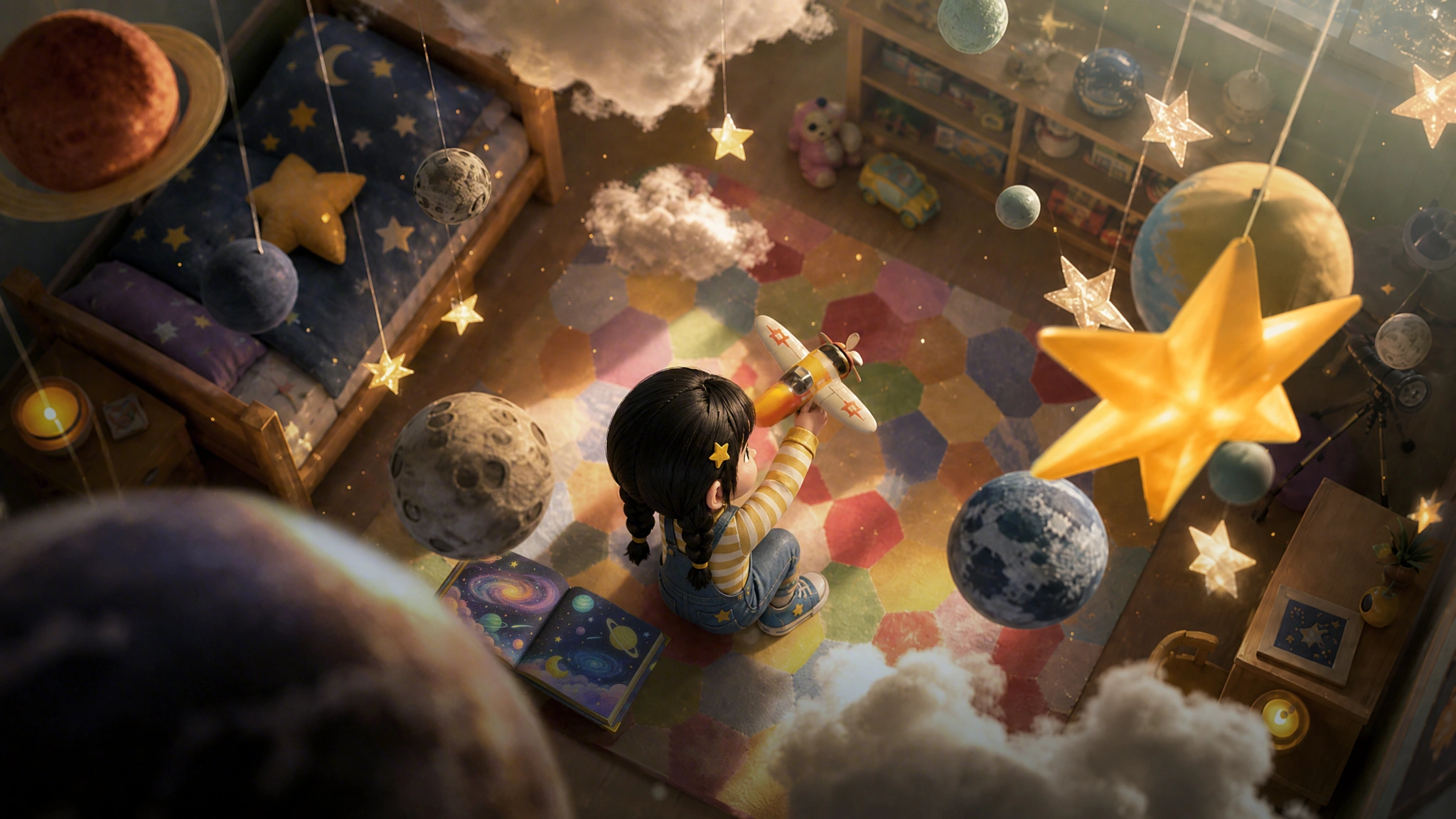
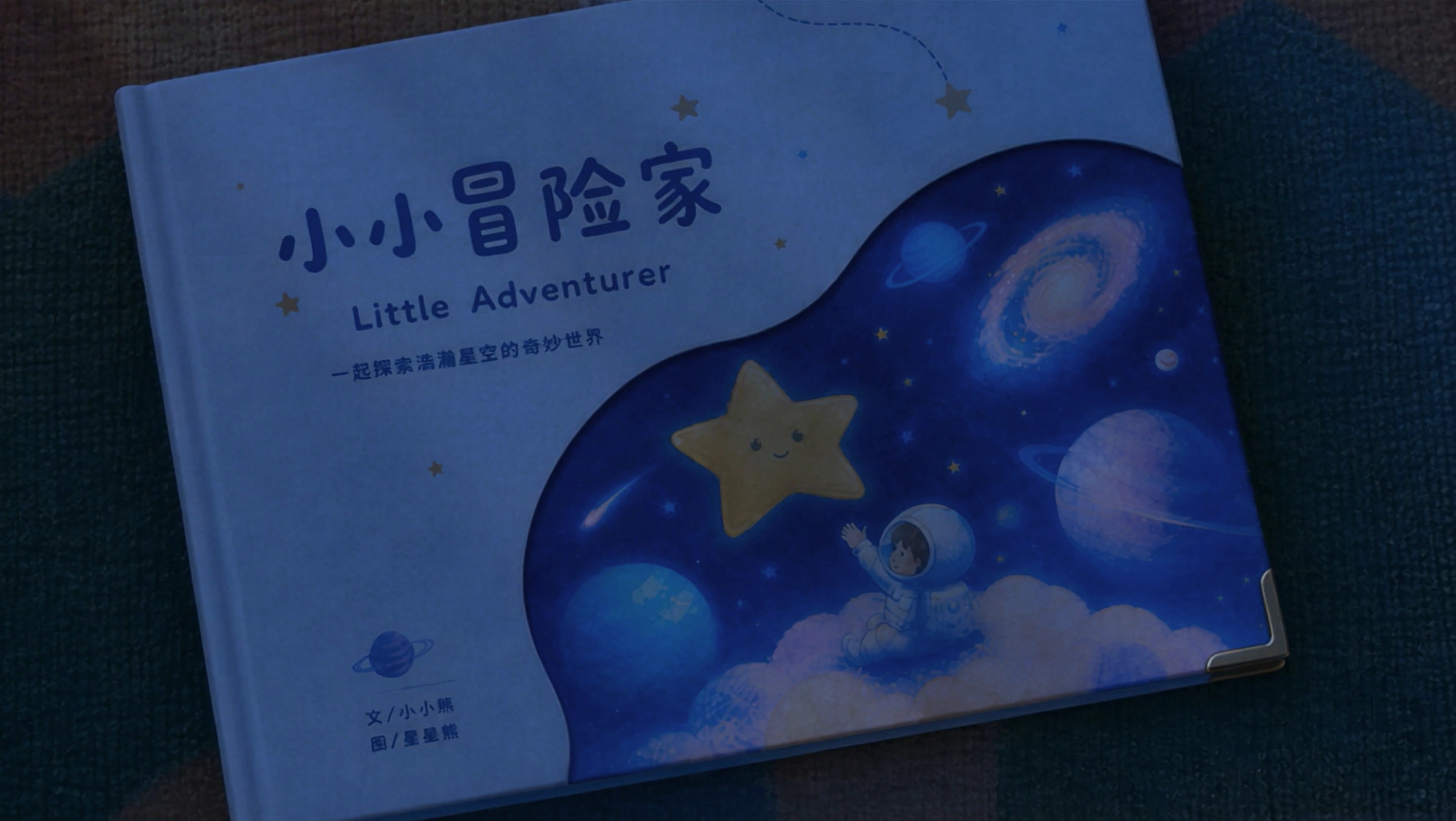
Use @Image1 as the opening keyframe and @Image2 as the final keyframe. Maintain the little girl's character design and the warm, dreamy 3D animated style throughout. Create a 30-second fantasy animated short film with smooth cinematic transitions, continuous character motion, and a warm, fairytale-like atmosphere. 0–3s — Bedroom Start from the overhead bedroom composition in @Image1. Slowly push toward the little girl sitting on the carpet with a toy airplane. She stands, turns left, and throws the airplane forward. As it flies toward the camera, the sound transforms from a toy airplane into a real engine, with gentle cheerful music beginning underneath. 3–8s — Fantasy Sky The airplane carries the girl into a magical sunset sky. The camera follows from the side and slowly orbits around her. She flies through glowing clouds alongside strange birds, a white dragon, a winged horse, and a flying whale, with floating islands in the distance. 8–19s — Underwater to Space The airplane dives toward the ocean and the girl falls underwater in a burst of bubbles. Wearing a bubble-shaped oxygen helmet, she swims deeper until a manta ray carries her through a colorful underwater world. Ahead, a huge space-time rift appears like shattered mirrors surrounding a glowing galaxy. She is pulled through it into a fantasy universe. 19–23s — Fantasy Universe Her outfit transforms into a spacesuit. She jumps between small planets, reaches forward, and catches a glowing star. 23–28s — Return to Bedroom The fantasy world flips and dissolves into the overhead bedroom from @Image1. The girl is now asleep on the carpet, still holding the star-catching pose. A toy airplane and space-themed picture book lie beside her. Her father enters and gently covers her with a blanket as the lighting shifts from warm dusk to cool moonlight. 28–30s — Final Frame The camera slowly pushes toward the picture book. Her father gently closes it with his right hand. Transition naturally into the exact final composition of @Image2, then hold on the final frame. Style & Consistency: High-quality 3D animation, dreamy fairytale atmosphere, cinematic color, soft volumetric lighting, smooth camera movement, natural long-take transitions, consistent character proportions and appearance, expressive but natural emotions, and continuous motion throughout. Avoid abrupt cuts, character drift, flickering, or inconsistent visual style.
Multi-Reference to Video, also called Omni Reference, combines multiple images, videos, and audio references to control characters, scenes, motion, style, and sound.
Prompt element: References + Subjects + Setting + Timeline + Camera + Style + Audio + Constraints
Reference materials
Example Prompt
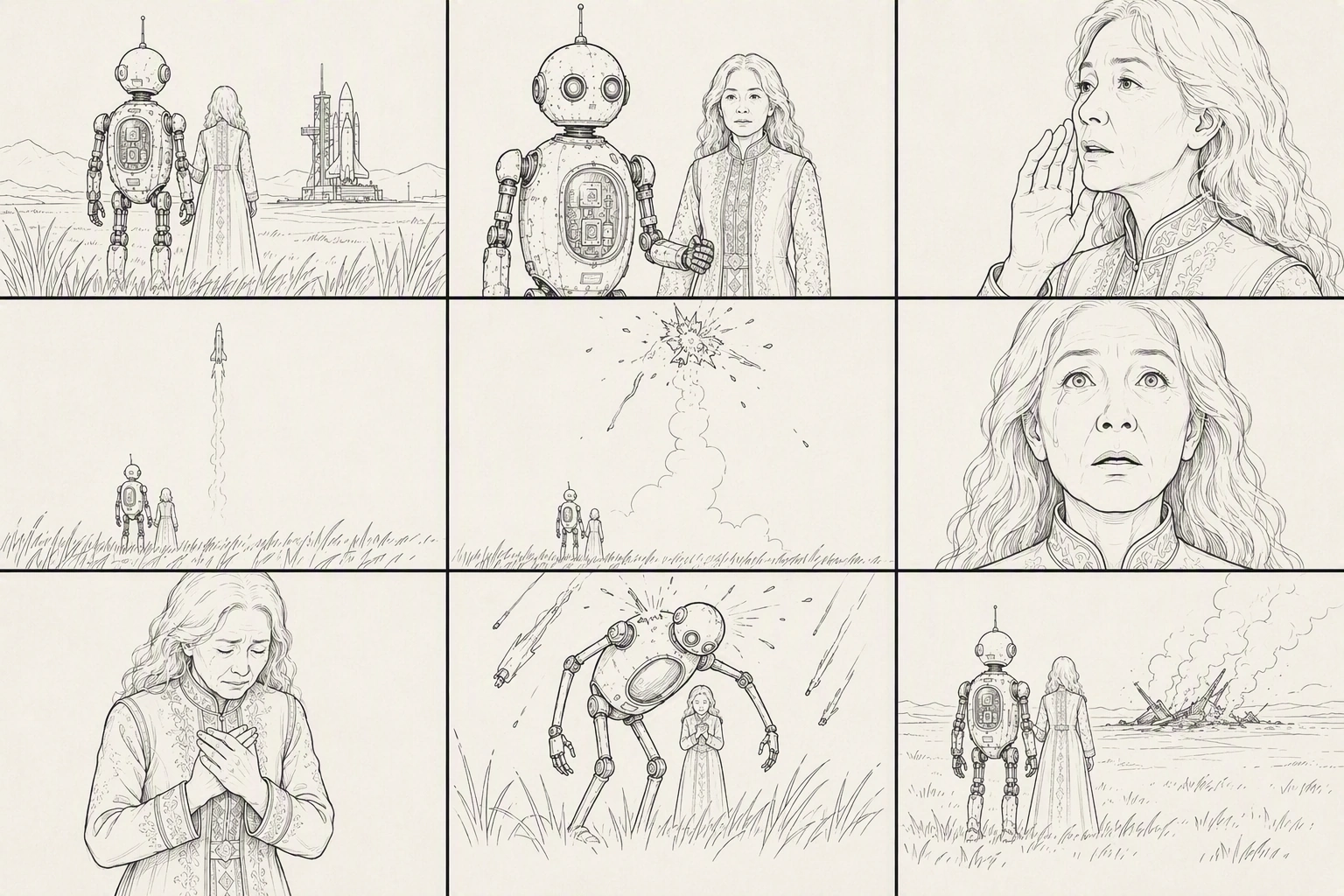
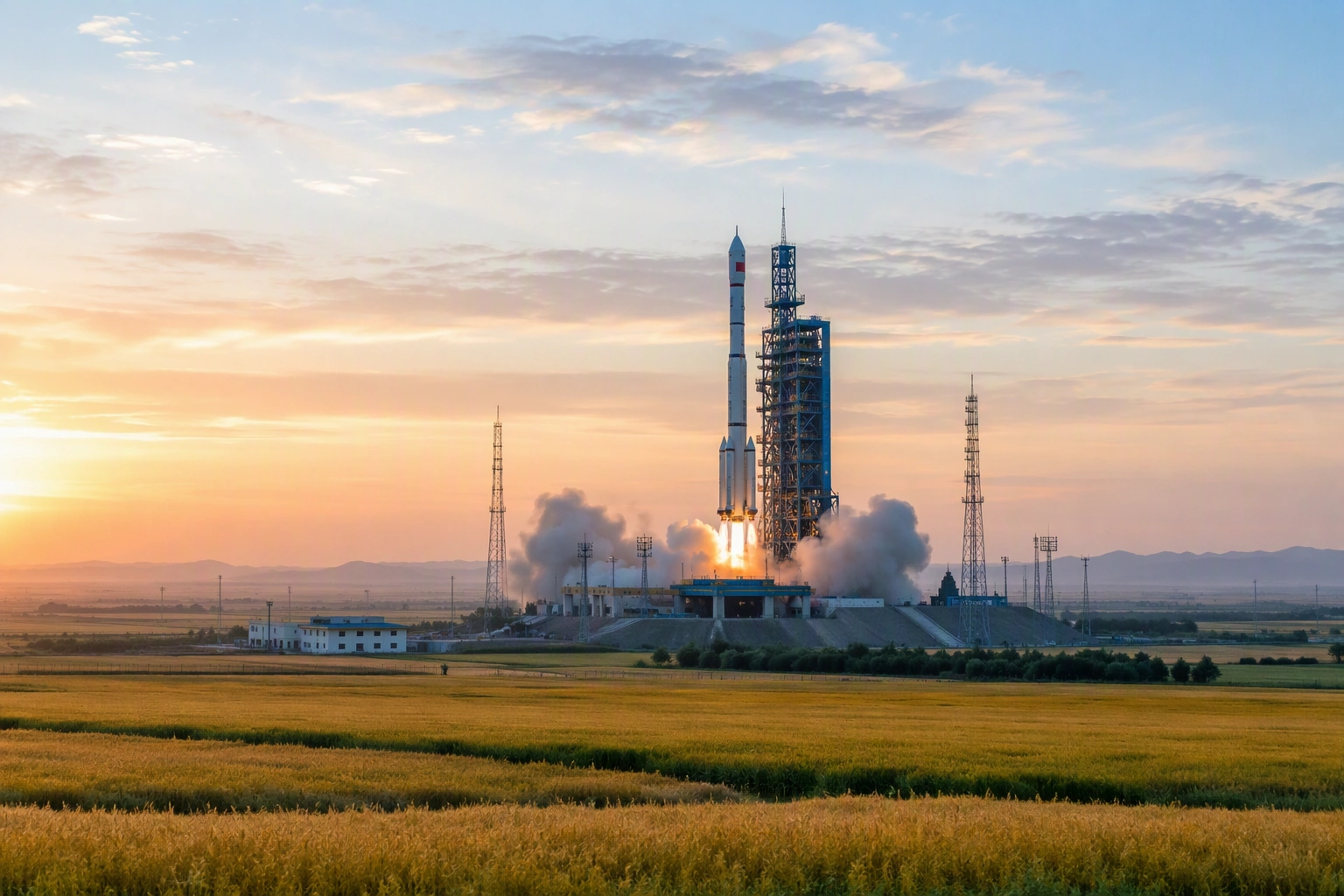
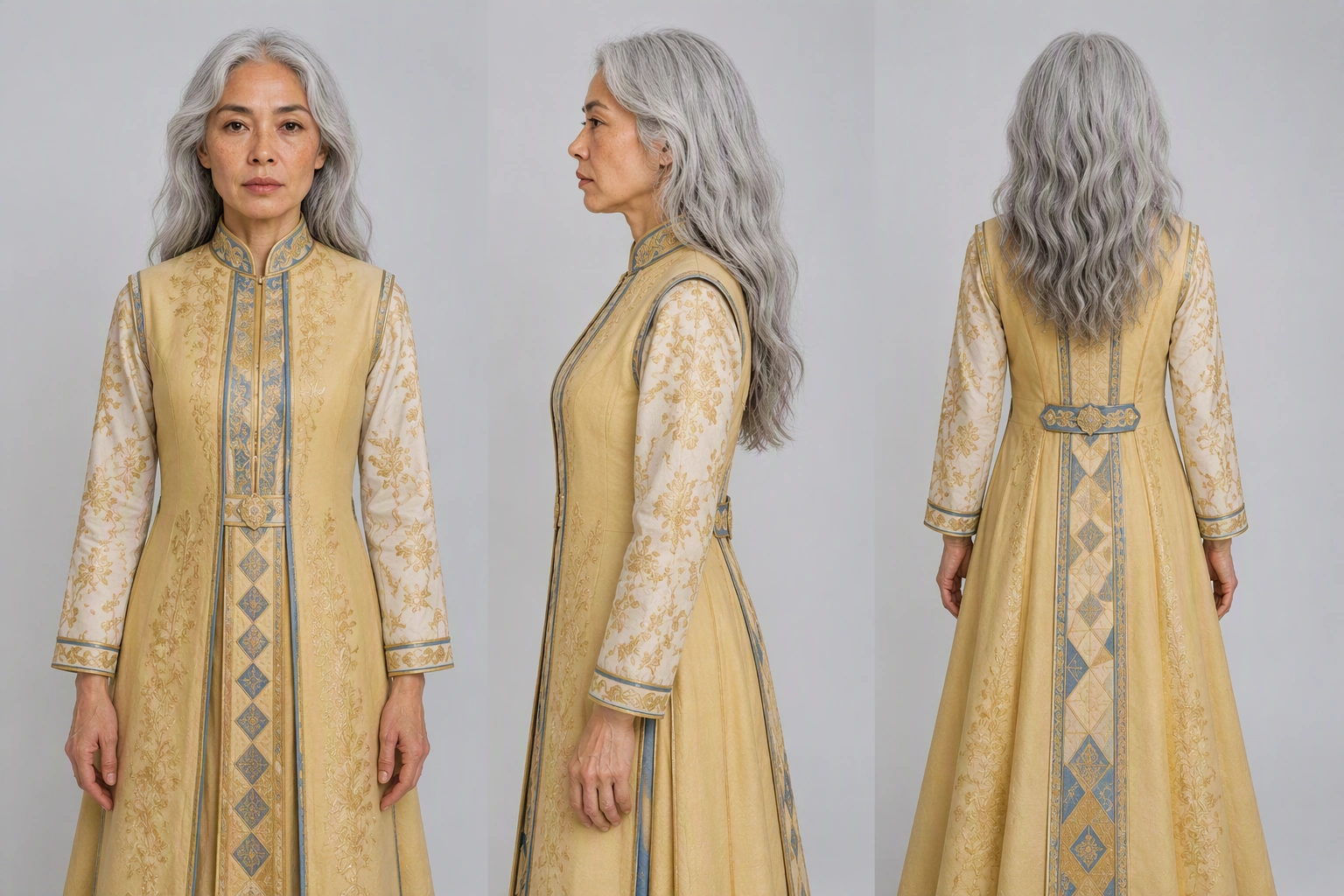
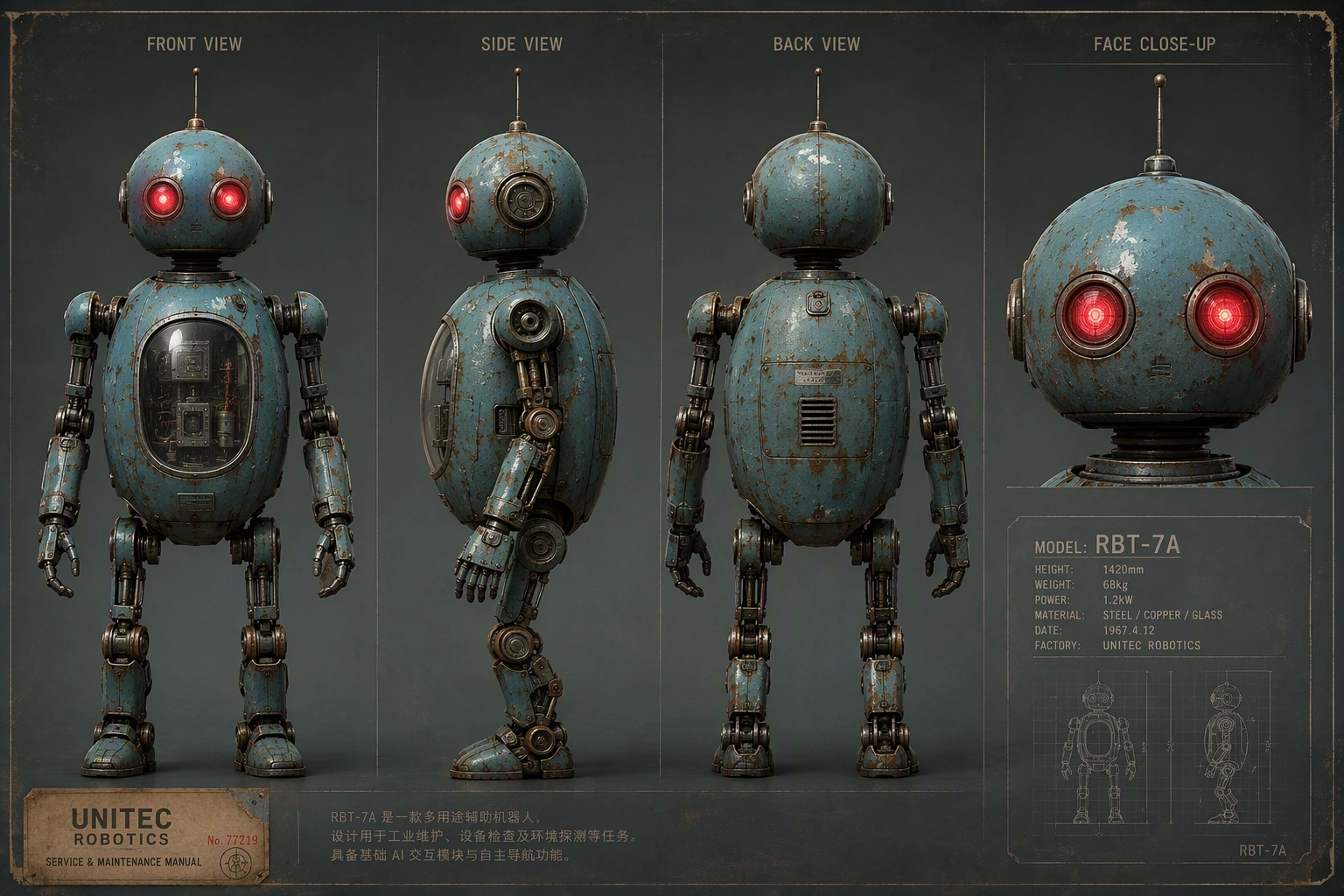
References @Image1 = 9-panel storyboard for shot order, framing, and camera rhythm. @Image2 = dusk grassland rocket-launch site, environment, composition, and lighting. @Image3 = guardian robot appearance. @Image4 = elderly grandmother appearance. Subjects Guardian robot: follow @Image3. Tall weathered retro-futuristic robot with blue-green metal, rust, domed head, red camera eyes, antennas, and slender limbs; about twice human height. Grandmother: follow @Image4. Frail elderly woman with silver hair in a low bun, deep wrinkles, and a bright gold floor-length embroidered dress. She reaches roughly the robot's chest. Environment & Style Follow @Image2: vast grassland at dusk, warm golden sunset fading into cool blue twilight, distant launch tower and white rocket, steam rising, tall grass moving in the wind. Photorealistic live-action cinematic look, color 35mm film grain, rich grading, IMAX feel, shallow depth of field, subtle handheld movement, drifting grass, sparks and ash. Emotional disaster-film atmosphere: quiet, tragic, protective. Avoid black-and-white, illustration, animation, storyboard/sketch style, miniature/toy look, plastic CG, or glossy CGI. 9-Shot Timeline — ~30s 0–3s — Extreme Wide Ultra-low ground-level shot across the grassland. Foreground grass sways out of focus as warm lens flare crosses the frame. 3–6s — Medium The robot supports the elderly woman. 6–10s — Close-Up The grandmother looks toward the rocket, reluctant and sorrowful. Dialogue: "Fly safe, my child. Come back to me." 10–14s — Extreme Wide The rocket launches, leaving a thick white smoke trail. Dialogue: "There he goes... there he goes." 14–18s — Extreme Wide The rocket suddenly explodes and breaks apart in the sky. Dialogue: "No... no, no—" 18–22s — Extreme Close-Up Her pupils contract and tears fall. Dialogue: "...he was almost there." 22–25s — Close-Up She breaks down crying. Dialogue: "Bring him back! Please—bring him back!" 25–28s — Low Angle The robot wraps around her protectively. Robot: "Don't look up. I've got you." 28–30s — Extreme Wide Rear Shot They embrace in silhouette beneath the darkening sky. Robot: "I'm still here. I'll stay... as long as you need."
Edit an existing video by clearly describing what should change and what must stay the same. Use the source video as the reference, then specify the target object, action, appearance, or scene you want to modify.
Prompt element: Subject · Reference Roles · Actions · Camera · Lighting · Consistency
Reference materials
Example Prompt
Preserve the composition, camera position, lighting, and performance rhythm of @Video 1. Only modify the female lead's appearance and expression: let her naturally age from her twenties to around sixty. The restraint in her eyes gradually softens, tears slide past the corners of her eyes, and the corners of her mouth slowly lift until she finally smiles through her tears. The entire video should be a continuous one-shot, with no jump cuts and no flickering. Her facial features should gradually age without drifting or changing identity.
Extend an existing video forward or backward while keeping the original character, scene, motion, camera style, and visual continuity. Describe what should happen next or before the source video.
Prompt element: Subject · Reference · Actions · Camera · Style · Consistency
Reference materials
Example Prompt
Extend @Video 1 by 5 seconds. A bee flies in and lands on the flower. Then, in a macro close-up, its legs and abdomen are covered with golden pollen particles. The bee flaps its wings and takes off, and the camera follows it as it flies toward another flower of the same species. In slow motion, pollen shakes loose from the bee's fine hairs and falls precisely into the flower's stamen, magnifying the moment of pollination.
Seedance 2.5 supports real-person images and videos as references on SeeGen AI, but these assets must pass official review before use.
Approval does not guarantee every generation will succeed. Tasks involving public figures, copyrighted characters, restricted, or sensitive content may still be blocked. Failed tasks are automatically refunded.
SeeGen AI Upload GuideUnlike Seedance 2.0, Seedance 2.5 can detect editing or extension intent from your prompt.
In Multi-Reference mode, words like replace, remove, change, edit, or extend may cause the task to be classified as Video Edit or Video Extend, which can lead to generation failure.
Use Multi-Reference for references, Video Edit for modifying a video, and Video Extend for continuing one.
Seedance 2.5 User GuideStart with a clear prompt, add the images, videos, or audio references that matter, and turn your idea into a more controlled AI video. Use Seedance 2.5 for longer scenes, multi-reference generation, video editing, extension, and more consistent characters, motion, style, and sound.
Try Seedance 2.5 Free